Cumbernauld has more small bathrooms than almost any Scottish town of its size. The town was master-planned in the late 1950s as a New Town, and the bulk of its housing stock — 1960s and 70s deck-access flats, low-rise Radburn terraces, and mid-rise council blocks — was built around a compact bathroom footprint. A typical CDC-era flat bathroom in Kildrum, Seafar, Carbrain or Abronhill measures roughly 1.9 m × 1.7 m. That's 3.2 square metres. Tight by any standard, but enough to fit a proper walk-in shower, vanity and WC if the layout is planned carefully.
Space-Saving Layout Ideas
Small bathrooms reward planning more than money. Five moves that genuinely free up space:
Wall-hung fittings. A wall-hung WC with a concealed cistern recesses 15 cm into the wall and clears the floor under it. Same with wall-hung vanities. The room reads bigger because the eye can trace the floor to the corners. This is the single biggest visual win in a CDC-era flat bathroom.
Niche shelving. A recessed shelf in the shower wall gives you somewhere to put shampoo without a dangling caddy. Cut into the stud wall during first fix — adds an hour of work, saves cm of usable space. In an original Cumbernauld flat the outer wall is often concrete, so niche shelving goes in the new stud wall you're building for the concealed cistern.
Sliding or pivot shower doors. A hinged shower door needs 70 cm of swing space. A sliding or pivot door doesn't. In a tight Abronhill or Greenfaulds bathroom that's the difference between being able to reach the basin and having to step around the door.
Corner basins. Semi-recessed and corner basins project much less than standard pedestals. Perfect in a bathroom where the entry door clashes with a pedestal basin.
Drop the bath. If the household genuinely doesn't use a bath, swapping it for a proper walk-in shower transforms the perceived size of the room. In a 1.9 m × 1.7 m Kildrum flat we can fit a 900 × 900 frameless enclosure where the bath was, leaving room for a vanity and WC along the opposite wall.
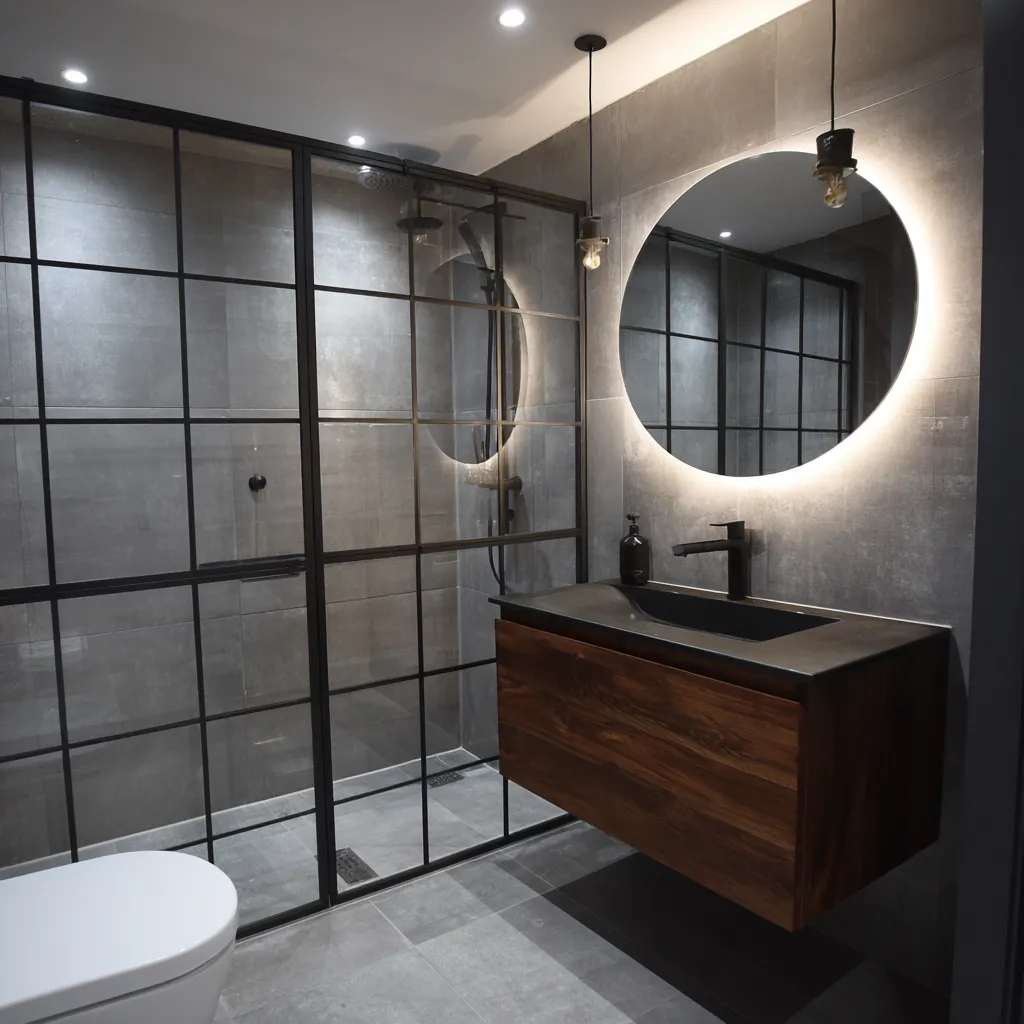
Wet Wall Panels vs Tiles in Small Rooms
The physical difference: tile plus adhesive takes roughly 10–15 mm off every wall. In a 1.9 × 1.7 room that's 4–5 cm of lost depth across the whole space. Wet-wall panels glue straight onto a prepared substrate and steal 5 mm max. Recovering 4 cm doesn't sound huge, but in a CDC-era flat it's the difference between a vanity door that opens properly and one that clashes with the WC.
There's also the maintenance angle. The original 1960s flats have poor through-ventilation — a single extractor from the original build, no opening window in some deck-access layouts, and bathrooms that sit behind the kitchen wall where cooking steam migrates. Tile grout blackens within two or three years. Wet-wall panels don't give mould anything to grab onto.
LVT vs Ceramic for Cumbernauld Floors
Cumbernauld's flooring story splits two ways. The original CDC flats have concrete substrates — ceramic tile works fine on them, and there's no floorboard-flex problem to worry about. For flats, the LVT-vs-ceramic choice is about feel: LVT is warmer underfoot and quieter. A cold concrete floor with a ceramic tile on top is a harsh start to a winter morning.
The Radburn low-rise terraces (Kildrum courtyard houses, parts of Seafar, Greenfaulds) are different — suspended timber floors with normal flex. Here, ceramic cracks along the grout lines within a few years unless the substrate is reinforced. LVT over an 18 mm ply overlay handles the movement without cracking.
Lighting Tricks That Make Small Rooms Feel Bigger
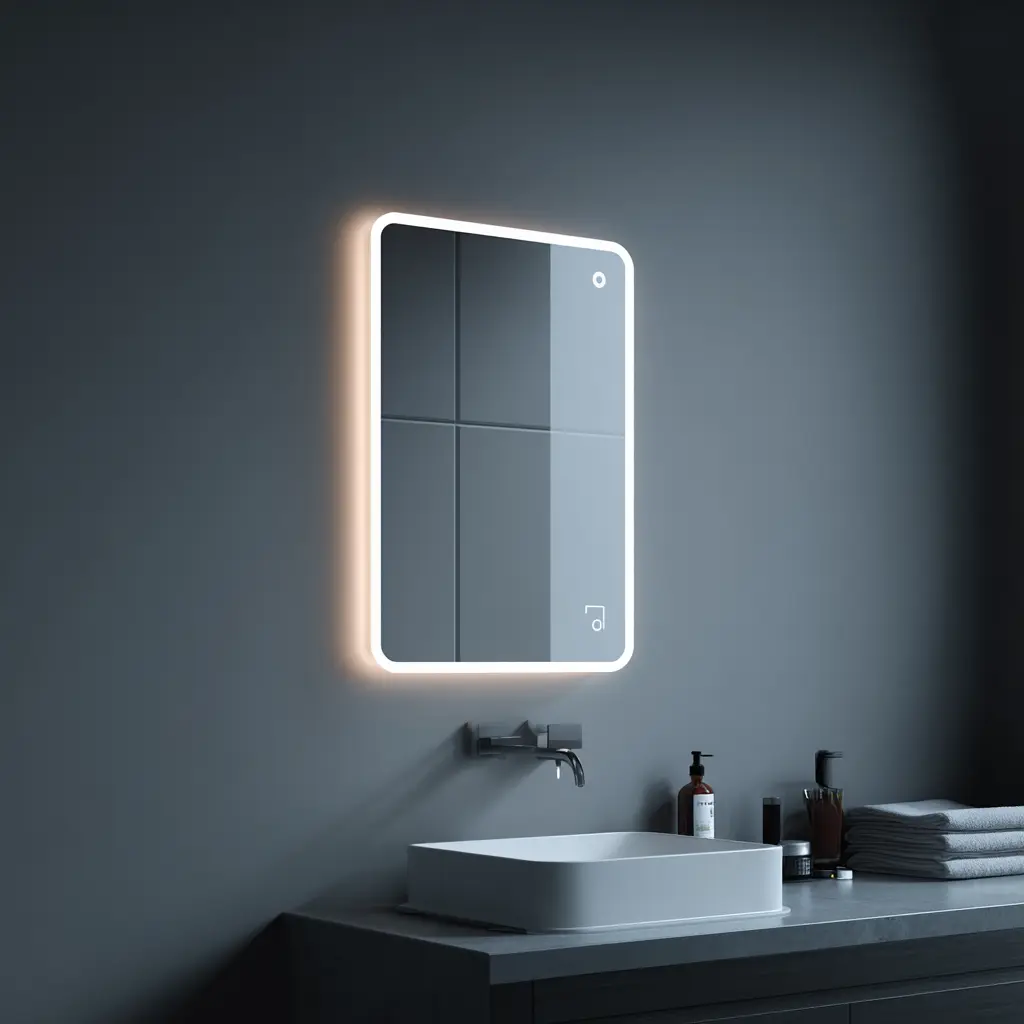
A backlit LED mirror over the basin bounces indirect light off the ceiling and removes harsh shadows. A couple of recessed IP-rated downlights in the ceiling (not GU10 fire-hazards retrofitted into a ceiling rose — proper zone-rated integrated LEDs) finish the job. In a windowless deck-access flat bathroom, this is the difference between "cramped" and "clean and calm".
White wet-wall in the shower zone plus a warmer tone on the feature wall is a useful trick. Breaks up the visual block of a single colour without making the room feel busier.
Common Mistakes to Avoid
- Oversized sanitaryware. A "deluxe" suite with a 600 mm vanity in a small bathroom makes the whole room look cramped. Scale down — 500 mm is often plenty.
- Dark grout. Black grout shrinks a room visually. White or off-white grout (or better, a wet-wall finish with no grout) is the right call.
- Heavy patterned floors. Small rooms benefit from plain or minimal-pattern LVT. Save the herringbone for a bigger bathroom.
- Towel rail on the wall with the door. You'll brain yourself on it. Towel rail goes on a side wall, out of the swing arc.
Related reading: floating vanities — the ultimate space-saver, wet room vs walk-in shower, and 2026 design trends. Service page: small bathroom specialists.
Call us on 01236 801802 or request a quote online to book a free home visit.