Bathroom electrics are one of the few things in a refit that the law has strong opinions about. The rules exist because water and 230V mains are a bad pair — and because every year a handful of UK homeowners are seriously injured by a fitting installed in the wrong location, or by a circuit that wasn't properly RCD-protected. This guide walks through what the rules actually say, what a compliant fit looks like, and the questions worth asking before you sign the quote.
The Three Bathroom Zones
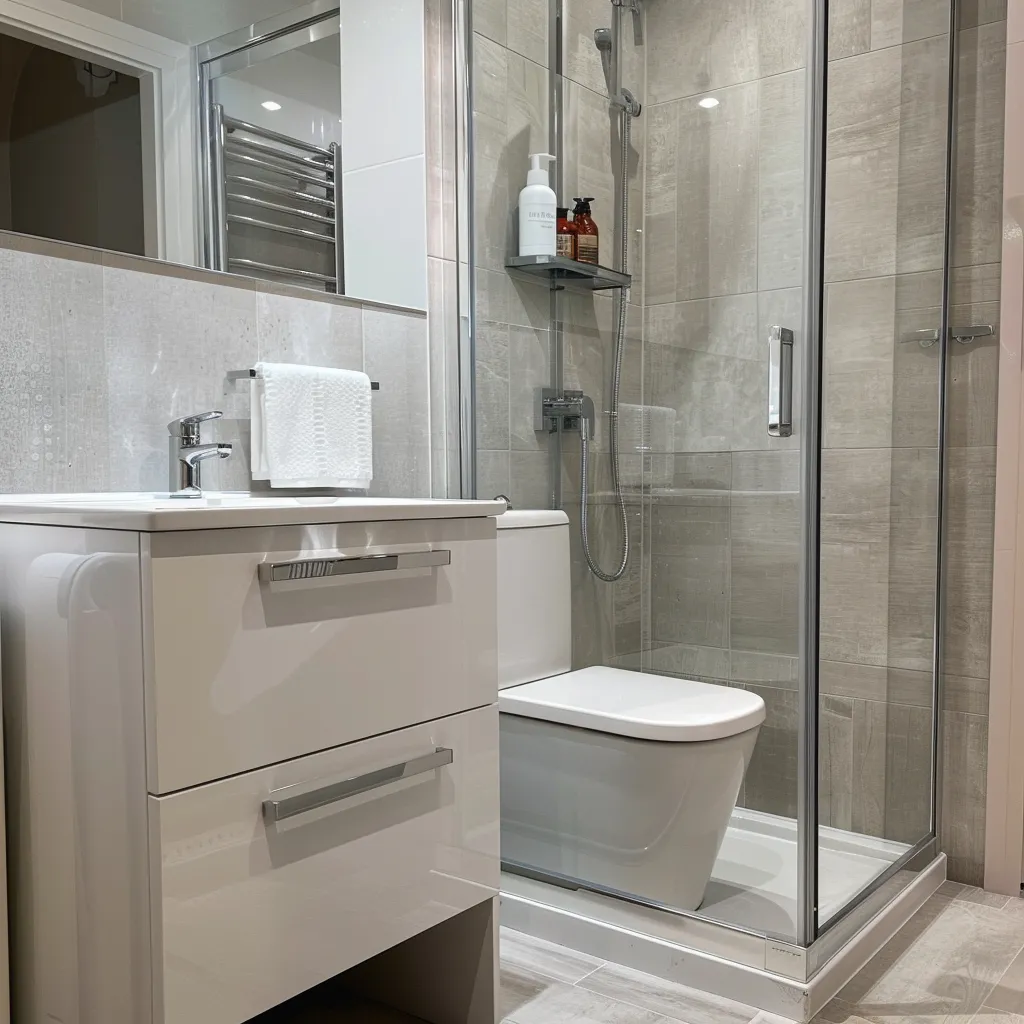
BS 7671 splits a bathroom into three zones based on proximity to water. Each zone has a minimum IP (Ingress Protection) rating for any electrical fitting installed there.
Zone 0 — inside the bath or shower tray
The interior of the bath itself, or the tray of a shower enclosure. Only fittings rated IPX7 or higher are allowed (think: rated for temporary immersion). In practice, most fitters avoid Zone 0 entirely — you'd only put something there if it's specifically designed for it, like an in-bath spotlight on a low-voltage SELV circuit.
Zone 1 — directly above the bath or shower, up to 2.25 m
The vertical space above the bath or shower. Minimum IPX4 (splash-proof). This is where the shower light and the shower itself sit. A standard "bathroom" downlight rated IP65 is comfortably above the requirement and is what we fit as standard.
Zone 2 — 0.6 m horizontally outside Zones 0 and 1
The 60cm strip of floor and wall around the bath or shower. Minimum IPX4. This is where shaver sockets typically sit — they need to be safety-isolated transformer types, and we mount them as far from the shower as the layout allows.
Outside the zones
Anywhere else in the bathroom — the wall opposite the bath, the area behind the WC, the back of the door. No specific IP rating required by the zones, though all bathroom fittings should still be sealed against humidity. We default to IP44 throughout for longevity.
What IP Ratings Actually Mean
An IP rating is two digits — for example, IP65. The first digit is solids (dust), the second is liquids (water). For bathrooms, the second digit matters more.
- IPX4 — splash-proof from any direction (the bathroom minimum for Zones 1 and 2)
- IPX5 — protected against low-pressure water jets
- IPX7 — protected against temporary immersion (the Zone 0 minimum)
- IP65 — dust-tight + protected against water jets (a sensible default for any bathroom downlight or LED mirror)
If a fitting doesn't have an IP rating printed on it or in the data sheet, it isn't certified for bathroom use. Plain decorative fittings from a non-bathroom range don't belong in any zone.
RCDs & Supplementary Bonding
Two safety mechanisms are mandatory in every BS 7671-compliant bathroom:
RCD protection
Every circuit serving the bathroom must be protected by a 30 mA Residual Current Device. An RCD detects current leaking to earth and trips in milliseconds — fast enough to prevent serious injury from a fault. Most modern consumer units have RCD-protected ways as standard; if your house still has a pre-2008 fuse board, an upgrade is usually needed before any bathroom rewire.
Supplementary equipotential bonding
A copper bonding cable that connects metal pipework, towel rails and other extraneous-conductive parts to the main earthing system. The 18th Edition of BS 7671 (2018) made this conditional rather than mandatory — if all bathroom circuits are RCD-protected and the main equipotential bonding meets requirements, supplementary bonding can be omitted. In older Scottish properties (anything pre-1990), we usually keep supplementary bonding in place because the main earthing is often historical and benefits from the belt-and-braces approach.
Scottish Certification & Building Standards
Scotland doesn't have an exact equivalent of England's "Part P", but the Building (Scotland) Regulations 2004 — and the supporting Domestic Technical Handbook — set the same outcome. Section 4 covers safety; Section 4.5 specifically covers electrical installations. The standard required is BS 7671. The work is notifiable, meaning a competent person needs to certify it.
In practice this means: after the bathroom is finished, you should receive an Electrical Installation Certificate (EIC) or Minor Works Certificate covering the bathroom circuits. The certificate is signed off by a qualified electrician — usually a member of NICEIC, SELECT or ELECSA — and is your evidence that the install meets BS 7671 and Scottish Building Standards. Keep it with the house deeds; future buyers' surveyors will ask for it.
If a fitter refuses, hesitates or charges extra for the certificate, that's a red flag. The certification cost is included in our fixed quote on every Cumbernauld bathroom fit we do.
Five Questions to Ask Your Fitter
- Are all bathroom fittings IP44 or higher, with IP65 over the bath/shower? Anything less is non-compliant.
- Is every bathroom circuit on a 30 mA RCD? The answer should be yes, full stop.
- Do you supply an Electrical Installation Certificate or Minor Works Certificate on completion? Should be included, not extra.
- Who's the qualified electrician — what scheme are they registered to? Ask for a name and a registration number.
- Will the consumer unit need an upgrade? If you're in a pre-2008 property, this is a fair question — and a sign that the fitter is doing their checks properly if they raise it themselves.
Related reading: Scottish building regulations for bathroom renovations, waterproofing 101, and our full FAQ.
Got a specific situation? Call us on 01236 801802 — we'll talk through what's needed for your property without trying to upsell you.