A cold bathroom is a problem you live with quietly. The shower's fine while you're under it; it's the 30 seconds afterwards on the cold tile floor, towelling off in a room that's 4°C below the rest of the house. You can fix it, but the right fix depends on why the room is cold — and there are five common causes, only some of which are about the heating itself.
Cause 1 — Towel Rail Isn't Running
The most common cause and the cheapest to fix. Most modern bathrooms have a heated towel rail (chrome ladder rail) plumbed into the central heating circuit. In about half the houses we visit, the customer hasn't realised it has its own thermostatic valve — or the valve is set to the lowest setting because it was the default factory position.
Quick check: find the small valve at one end of the towel rail (usually the bottom right, beneath a chrome cap). Turn it from setting "0" or "*" to setting "4" or "5". Wait 20 minutes; the rail should heat up.
If your central heating runs on a timer (most do — morning and evening), the rail will heat with the rest of the system. You can leave it on continuously through the heating season and it will only run when the boiler is firing for the rest of the house — minimal extra cost.
Estimated effort: 30 seconds. Cost: £0 (or £45 for a new TRV if the existing one's seized). Impact: raises bathroom temperature by 2–4°C during heating cycles. Single biggest free win.
Cause 2 — Extractor Running Too Long
Counterintuitive but real. Modern bathroom extractors are often set to run for 20–30 minutes after the light goes off, to clear residual humidity. That extracted air gets replaced by cold air from elsewhere in the house — usually drawn through gaps under the door and around the window seal. After a 10-minute shower, the room has cooled by 5–7°C just because the heated air's been pulled out.
The fix: shorten the run-on timer. 12–15 minutes is enough to clear the steam from a properly-sized extractor; 30 minutes is overkill and contributes to the cold problem.
If the extractor runs constantly (humidity-sensing model that's stuck on, or a continuous-extract whole-house system), check the humidity threshold — bathrooms with mould-resistant finishes don't need to run as wet as the factory default assumes.
Estimated effort: 15 minutes (adjust the timer DIP switches inside the fan housing, electrician-friendly). Cost: £0. Impact: retains 2–3°C of post-shower warmth. More on ventilation here.
Cause 3 — Cold External Walls
Properties without cavity wall insulation — solid concrete CDC-era flats, single-skin sandstone tenements, solid-stone village cottages — have external walls that stay cold all winter. The internal surface of the wall sits at 12–14°C even when the room is at 19°C. You feel it: walking past the wall, your skin senses the heat being pulled out of you.
The fix has to be done at the same time as a bathroom refit (you have to expose the wall surface to fit insulation behind a new finish). When we re-fit a bathroom in a cold-walled property, we batten the external walls with 50×25 timber, fit 25mm PIR insulation between the battens, and finish over the top with wet wall or tile. Internal wall surface temperature rises by 5–8°C — the room genuinely feels different.
Estimated effort: part of a full bathroom refit. Standalone, not practical. Cost: £180–£300 added to a bathroom fit. Impact: single largest contributor to bathroom warmth in older properties.
Cause 4 — Cold Floor
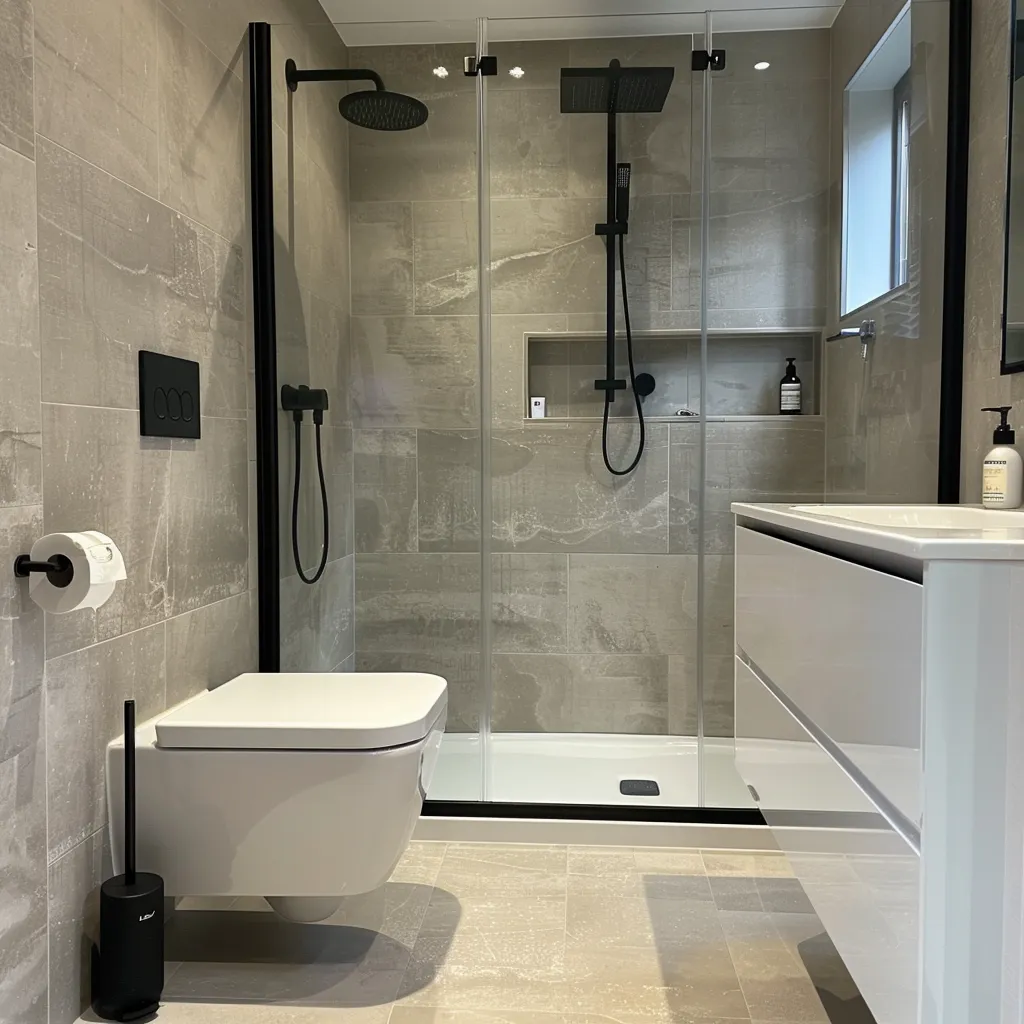
Tile and stone floors are cold to the touch — typically 12–15°C in winter, even in a warm room. Walking on a cold floor barefoot makes the whole room feel colder than the air temperature suggests. LVT and vinyl floors are warmer (typically 18–20°C) because they're less dense and less conductive.
Two fixes:
Underfloor heating retrofit
Electric heating mat under the tile or stone, programmable thermostat, runs for 1–2 hours in the morning and evening. Floor temperature rises to 26–28°C — comfortable underfoot. £450–£900 retrofit, £4–£8 per month running cost. Worth it on tile floors. More here.
LVT replacement
Replacing tile with quality LVT raises floor temperature by 4–6°C without any heating. Cheaper than UFH (£400–£700 for a typical bathroom), but compromises the look in a tile-led design.
Cause 5 — Draughts
Less obvious but adds up. Three common draught sources in bathrooms:
- Around the soil stack. Where the soil pipe passes through the floor or wall, the original 1970s install often has a 50mm gap stuffed with newspaper. Wind pushes through this gap into the room.
- Under the bathroom door. The draught threshold of bathroom doors is typically high (12–15mm) to allow ventilation. Combined with strong extraction, that gap pulls cold air from the corridor.
- Old window seals. Single-glazed sash windows in older properties, or perished rubber seals on uPVC windows, leak air constantly.
Draught fixes range from free (foam fillers around soil stacks, draught excluders on doors) to substantial (window replacement). The first two are weekend DIY jobs.
What Order to Fix Things
If you've got a cold bathroom, work through these in order:
- Free fixes first. Turn on the towel rail. Shorten the extractor over-run. Foam-fill any visible draughts. Costs nothing; resolves about 40% of cold-bathroom complaints.
- Cheap upgrades next. Replace seized TRVs (£45). Add a draught excluder under the door (£20). Get the existing extractor properly serviced (£70).
- Mid-cost upgrades. Underfloor heating retrofit if you've got tile and the floor's coming up anyway (£450–£900).
- Big fix during refit. Insulate cold external walls when the bathroom's getting refitted anyway (£180–£300 added to a refit). The single largest impact on older properties.
For most cold bathrooms in Cumbernauld and the wider central Scotland area, fixes 1 and 4 between them transform the room. If you're refitting anyway, build in the wall insulation as standard.
Related reading: underfloor heating worth it?, ventilation rules, condensation causes & fixes. Service pages: tiled bathrooms (best paired with underfloor heating) and wet wall bathrooms.
Got a cold bathroom that won't warm up however much you turn the heating on? Call 01236 801802 — most of the time we can identify the actual cause in 10 minutes at the home visit.