Water and mains electricity share a small steamy room only because the rules choreograph them precisely. The zone system isn't bureaucracy — it's the map of where splashes land, and every light fitting sold declares (via its IP rating) which part of that map it's built to survive. Learn to read both and lighting plans design themselves; ignore them and you're gambling with the most avoidable hazard in the house. This is the lighting chapter of our broader Scottish bathroom electrics guide.
Why Zones Exist
The wiring regulations (BS 7671) grade the bathroom by proximity to water: not all of the room is equally wet, so not all of it demands the same protection. The zones formalise what a splash actually reaches — immersion, spray, occasional splash — and match each band to a minimum ingress protection. Everything else about bathroom electrics (RCD protection throughout, supplementary bonding where required, no standard sockets) sits on top of that map.
The Zone Map, Walked Through
- Zone 0 — inside the bath or shower tray: immersion territory. Only SELV (max 12V) fittings rated IPX7. In practice: almost nothing goes here, by design.
- Zone 1 — above bath/tray to 2.25 m: spray territory. Minimum IPX4 (IPX5 where water jets are used for cleaning), SELV or RCD-protected fittings; typical home: an IP65 recessed downlight over the shower.
- Zone 2 — 600 mm horizontally beyond zone 1, and around the basin: splash territory. IPX4 minimum — where most lit mirrors and wall lights live (the window sill above a bath counts too, a detail DIY forgets).
- Outside the zones: no specific IP demand, but a steamy room rewards IP44 thinking anyway — and standard 13A sockets stay outside the bathroom full stop; shaver units are the exception.
Reading IP Ratings
IPXY: X scores solids (dust), Y scores water — the bathroom digit. Y=4 shrugs off splashes from any direction; 5 takes jets; 7 survives immersion. So IP44 is the zone-2 workhorse, IP65 the shower-zone downlight standard, IP67 the pond light you don't need. The rating is printed on every box: matching it to the zone map is the entire trick.
Lighting Design Inside the Rules
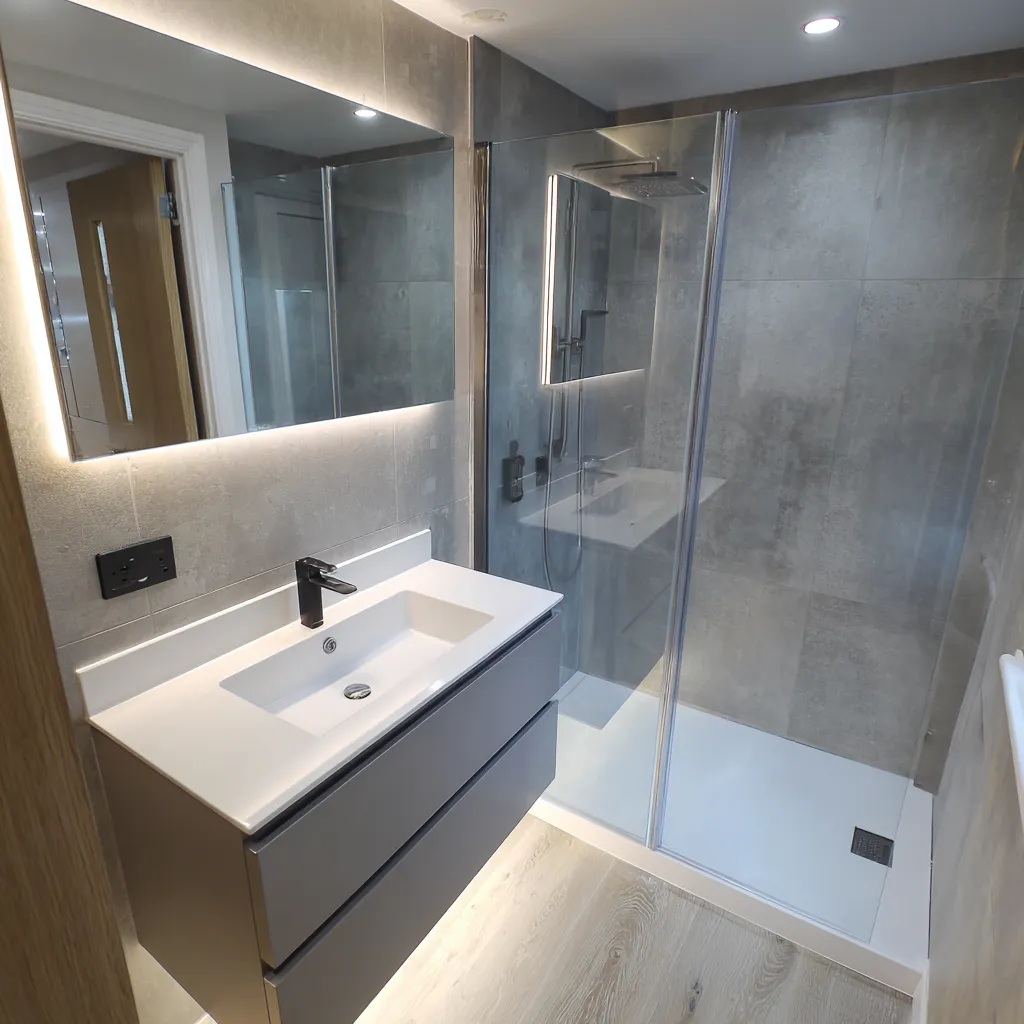
The zones constrain fittings, not quality of light. The layered recipe that works in real rooms: ambient downlights on the ceiling grid (IP-rated over wet zones); task light at the face from a lit mirror or cabinet — the layer most bathrooms lack and the one that matters for shaving and make-up (the mirror comparison); and optional accent — LED strip under a floating vanity earns its keep as a night light. Switching: outside the door or pull-cord inside; dimming and colour-temperature options all exist in zone-rated forms now, so the rules cost you nothing aesthetically.
The Classic DIY Mistakes
The pendant lamp migrated from a bedroom into zone-adjacent airspace; the unrated spotlight swapped into a shower downlight housing; the socket "just for the radio" inside the door; the extractor wired to nothing. Each is a Home Report flag at sale and a genuine hazard meanwhile — and regularising DIY electrics costs more after the fact than doing it right did originally.
Certification: The Part That Follows the House
Every notifiable bathroom electrical job should end in certification to BS 7671 — the paperwork a solicitor asks for at sale and an insurer asks for after an incident. In our fits the electrician designs to the zones, installs RCD-protected circuits, and hands over the certificate as standard (the wider rules). Light the room beautifully; keep the paper trail boring.
Related reading: Bathroom electrics in Scotland, LED mirrors vs cabinets, Home Report bathroom flags, Modern bathrooms.
Not sure which way to go in your own bathroom? Call 01236 801802 — a five-minute conversation usually settles it.