Every bathroom heating conversation eventually reaches the same question: "what will it cost to run?" The internet answers with wattages and hedge-words. Here's the fitter's version — no tariff predictions, just the structural facts about which heat is cheap, which is dear, and how to combine them so the dear kind only runs when it's earning its keep.
One number that reframes this whole topic: Scottish building guidance estimates that around 30% of an average household heating bill goes on heating water — for washing, bathing and general hygiene. Nearly a third of what you spend keeping the house warm is really being spent on hot water.
That's an average cited in guidance, not a prediction for your house, and it won't shift much because of a new bathroom on its own. But it does explain why we spend longer talking about your hot-water setup than about the towel rail. The Energy Saving Trust reckons a water-efficient shower head could save a typical household around £25 and 9,000 litres a year — "could" being the operative word, since it depends entirely on your shower type, tariff and how long everyone takes.
Scottish Government, Domestic Technical Handbook, April 2026, Standard 3.27; Energy Saving Trust (Great Britain estimates, April 2026).The Only Sum You Need
All heating cost is (power drawn) × (hours running) × (price per unit). The first two you control by sizing and timing. The third is the structural one: a unit of electricity has cost several times a unit of gas for years, across every tariff era. So the same warm bathroom costs several times more to achieve with an electric heater than through a gas-fired central heating loop. That one ratio decides almost every choice below — and it's why "just fit an electric panel, it's cheaper to install" is the classic false economy: cheapest to fit, dearest to run, for fifteen years.
Plumbed Options: The Cheap Heat
A towel rail or radiator teed into the central heating adds a trivial marginal cost to heat your boiler is already making. The bathroom warms with the house schedule, the towels dry for pennies, and the only electricity involved is the boiler's pump. Sizing between rail and radiator is the output question we covered in towel rail vs radiator — but on running cost, anything plumbed beats everything plugged.
Electric Options: Comfort Priced Honestly
- Dual-fuel towel rail: the smart hybrid — plumbed in winter, a timed element drying towels in summer without firing the boiler. Small element, short runtimes: the well-behaved kind of electric.
- Electric-only rails and panel heaters: fine in en-suites far from pipework; as a main bathroom's primary heat, the ratio bites every January morning.
- Heated mirror pads: tiny draw, big convenience — demisting glass, not heating rooms. Cost-irrelevant, comfort-relevant (see the mirror guide).
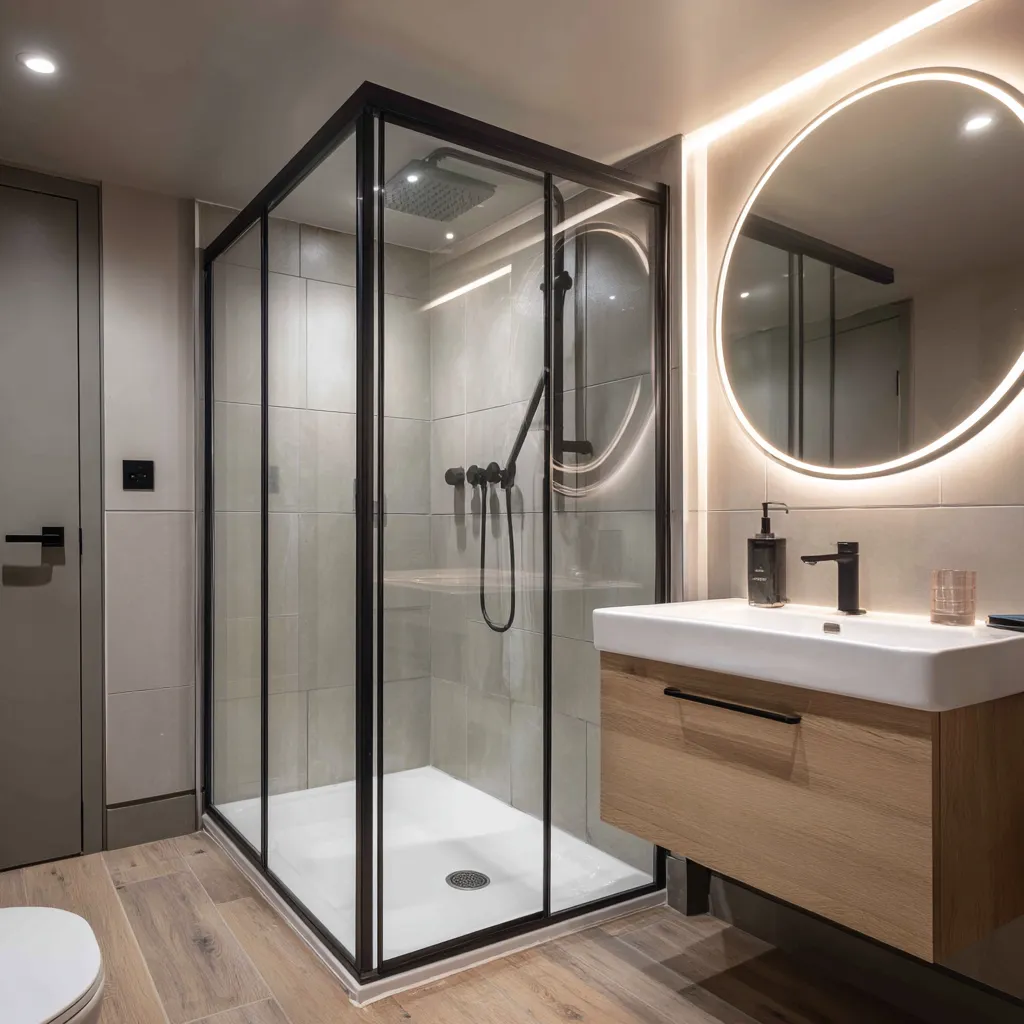
Underfloor Heating's Real Bill
Electric UFH mats are the luxury everyone asks about, and the honest framing is: it's an electric heater the size of your floor. Run as background warmth all day, it's the dearest heat in the house. Run on a timer for the 6:30–8:30 shift under tile, it's an affordable morning luxury that transforms how the room feels. The full worth-it analysis — including when tile-plus-UFH beats naturally-warmer LVT — is in our UFH guide; the running-cost rule is simply: timed shifts yes, all-day no.
Insulation Beats All of It
The cheapest unit of heat is the one the room stops losing. Cumbernauld's cold-bathroom culprits — uninsulated gable walls in CDC flats, solid stone in Village cottages, single-glazed windows — leak heat faster than any sensible heater replaces it. Insulated wet wall build-up on the cold wall (standard in our fits), decent glazing and controlled ventilation drop the heat demand before you size a single emitter — the whole strategy is in cold bathroom fixes. Insulate first, then heat what's left.
Our Recommended Recipe
Gas-heated home: insulated build-up + plumbed (ideally dual-fuel) rail sized to the room; UFH as a timed treat under tile if the budget smiles. All-electric home: insulation matters double; size a timed electric rail or panel to the calculated load and zone it tightly. Either way the sizing sum happens on the home visit — a warm bathroom is a design outcome, not an accessory purchase.
Related reading: Towel rail vs radiator, Is UFH worth it?, Cold bathroom fixes, Condensation causes & fixes.
Not sure which way to go in your own bathroom? Call 01236 801802 — a five-minute conversation usually settles it.