We fit a lot of rental stock — Cumbernauld's schemes, Airdrie and Coatbridge terraces, ex-council flats bought as investments. Landlord customers ask different questions from homeowners, and better ones: not "which finish?" but "what stops the phone ringing?" This guide answers the landlord version properly, with the Repairing Standard companion piece covering the legal floor.
The Landlord's Different Equation
An owner's bathroom is consumption; a landlord's is plant. The value drivers: maintenance callouts avoided (each one costs money and tenant goodwill), tenancy length (bathrooms and kitchens drive renewal decisions), achievable rent and void speed (a crisp bathroom lets faster), and compliance exposure retired. Spec decisions flow from those four, and they produce a different bathroom from the owner-occupier's — cheaper in some lines, deliberately dearer in others.
Rental vs Owner Spec, Itemised
- Walls: wet wall, non-negotiable — grout is a maintenance subscription; panels are not (the case)
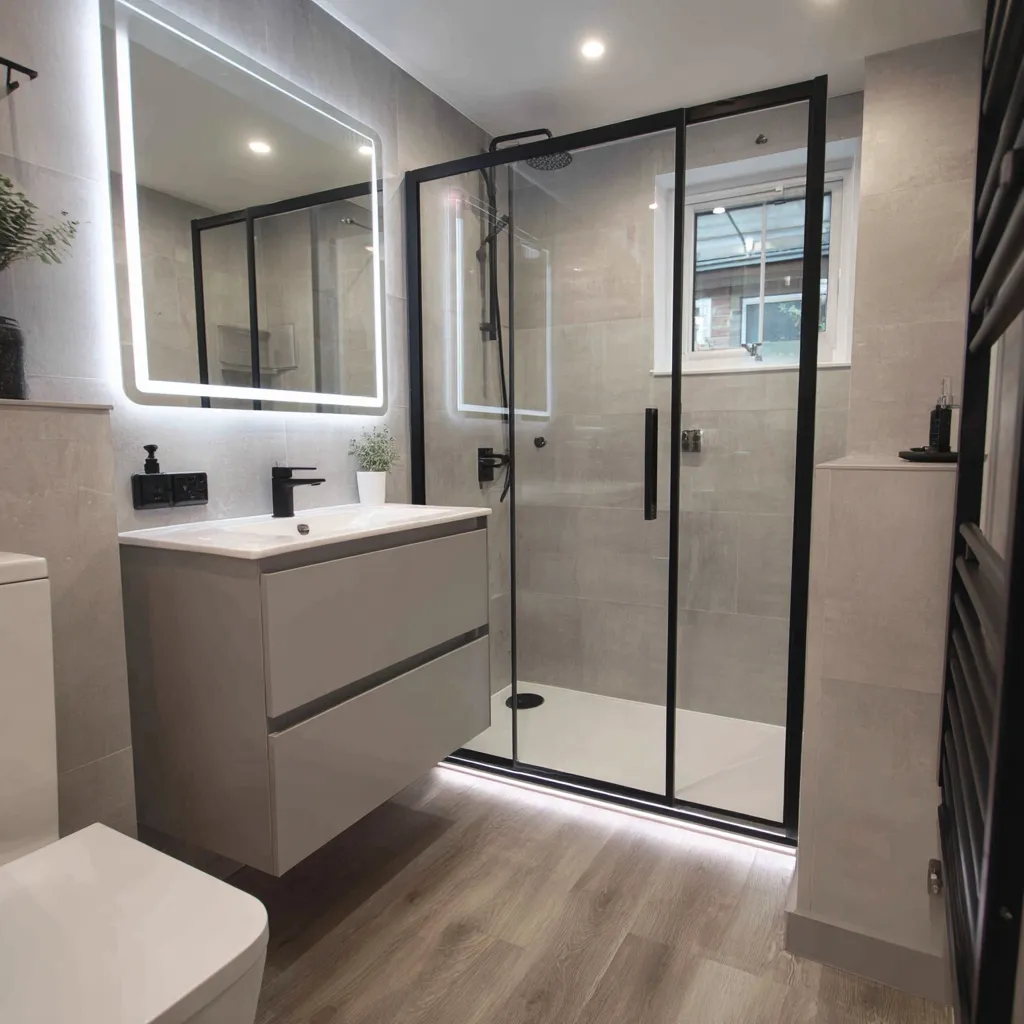
- Floor: LVT — waterproof, warm, and plank-repairable between tenancies instead of full replacement
- Ventilation: humidity-sensing extractor — compliance that doesn't depend on tenant switch habits; the single best anti-mould, anti-complaint line on the sheet
- Moving parts: spend UP here — branded flush valves, cartridges, hinges (why); every £15 part that fails in a rental is a £90 callout wearing a part costume
- Shower: thermostatic, always — scald protection where you don't choose the occupants; electric has resilience virtues in rentals too (no boiler call = still showering)
- Skip: the luxury layer — freestanding baths, designer brassware, feature lighting return nothing on the rent line
Net position: rental spec is our standard package tier — from £3,699 — with the spend redistributed toward durability rather than trimmed.
The Callout Arithmetic
Sum a marginal bathroom's true annual cost: the resealing visits, the regrout, the extractor replacement, the mould wash-downs, plus management time per incident — then add what it costs at tenancy change, when tired bathrooms lengthen voids and soften achievable rent. Set that stream against a one-time durable refit amortised over its long life, and the refit wins comfortably in most portfolios we see — before pricing the tribunal risk it retires. Landlords who've run both models don't need convincing; new landlords inherit the drip-feed and learn.
Voids, Timing and Logistics
The between-tenancy window is the natural slot: our 5–7 day fit (5 more often, in compact rental rooms) sits inside a normal void with days to spare for the inventory clerk. Book against your notice periods — the calendar guide's quiet months apply doubly to landlords, who can choose timing freely. Occupied refits are possible with cooperative tenants (and often buy enormous goodwill); they just need honest scheduling conversation up front.
The Compliance Dividend
A refit done properly retires a landlord's bathroom-shaped legal exposure in one pass: Repairing Standard condition heads, ventilation adequacy, certified electrics feeding the EICR file, and a paper trail — our written guarantee, certificates, warranty documents — that answers any future tribunal question before it's asked. The Repairing Standard guide details what inspectors and tribunals actually look at.
Portfolio Pricing and Paperwork
Multiple properties get planned as a programme: consistent spec (one spares shelf serves every flat), scheduling around your tenancy calendar, fixed per-unit pricing for budgeting, and invoicing/documentation formatted for your accountant and your compliance file. One conversation on 01236 801802 sets it up.
Related reading: The Repairing Standard explained, Branded vs trade: where to spend, When to book a fit, Mould: causes & fixes.
Not sure which way to go in your own bathroom? Call 01236 801802 — a five-minute conversation usually settles it.