A fair share of our work is rental stock — landlords across Cumbernauld, Airdrie and Coatbridge refitting between tenancies or after the letter no landlord enjoys. Scottish rental law is specific about what a bathroom must be, and pragmatic landlords have worked out that the cheapest way to meet it is once, properly, rather than callout by callout. Here's the legal floor and the spec that clears it with room to spare.
What the Repairing Standard Says
The Repairing Standard (Housing (Scotland) Act 2006, since extended) applies to private tenancies and requires, among its heads: the property wind and watertight and reasonably fit for habitation; installations for the supply of water and sanitation in a reasonable state of repair and in proper working order; fixtures and fittings in reasonable repair; safe electrical installations; and adequate provision against condensation and damp. Landlords must check compliance at tenancy start and keep it throughout — it's a continuing duty, not a move-in checkbox.
How Bathrooms Fail It
The bathroom concentrates more Repairing Standard exposure than any other room:
- Leaks and failed seals — the classic "reasonable repair" failure, and the one that damages the flat below too
- Mould and condensation — where ventilation is inadequate, this reads as a standard failure, not a tenant lifestyle issue; broken extractors are indefensible (the ventilation rules)
- Sanitaryware not in proper working order — running cisterns, seized valves, cracked basins
- Electrical items unverified — bathroom electrics fall inside the mandatory EICR regime; uncertified DIY additions are a double failure (electrics guide)
The Tribunal, Briefly
Tenants can refer a failing property to the First-tier Tribunal (Housing and Property Chamber) — no fee, no lawyer needed. The tribunal can issue a Repairing Standard Enforcement Order; non-compliance with an RSEO is where consequences get serious, including rent relief and criminal exposure. The pattern in published cases is monotonous: damp, mould, ventilation, leaks — bathroom failures, overwhelmingly. It's an avoidable list.
The Rental Refit Spec That Works
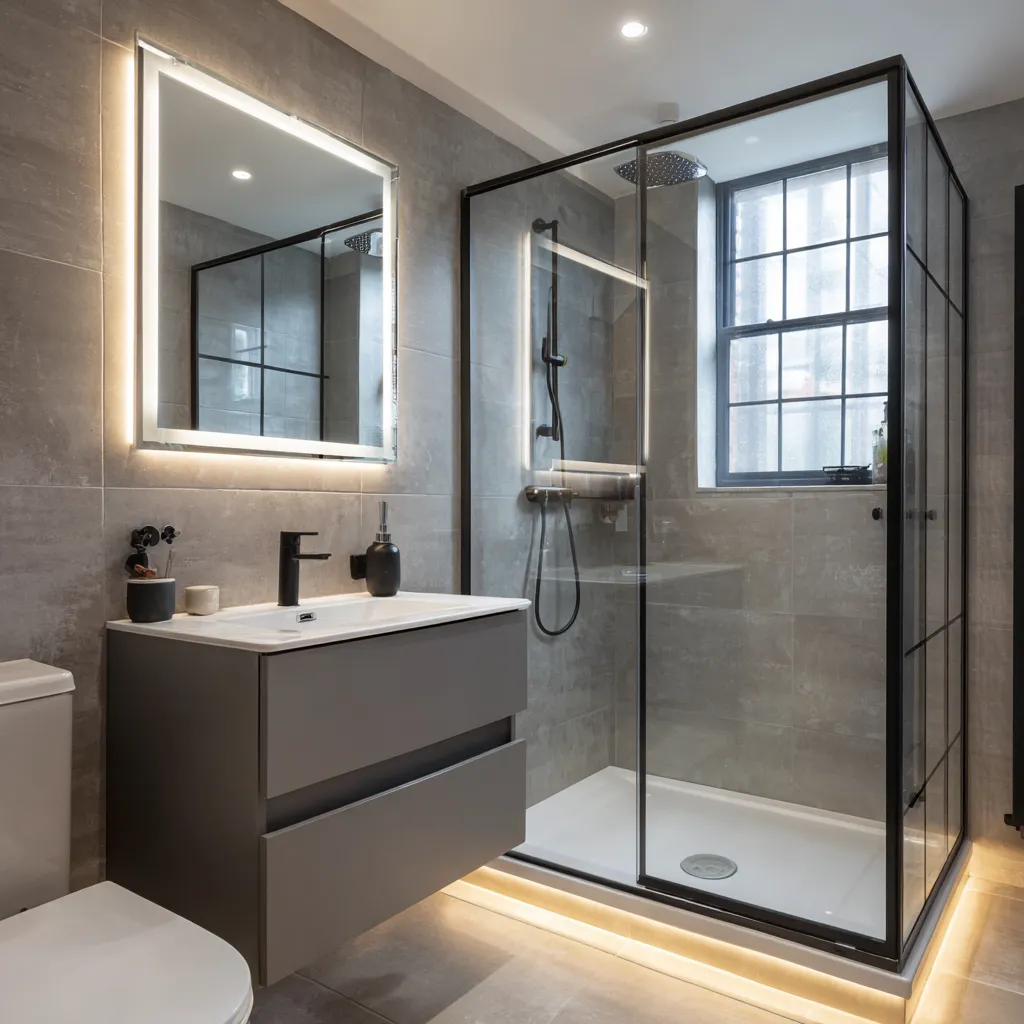
Rental bathrooms need durability-per-pound, not luxury — the failure points designed out:
- Wet wall over tiles: no grout lines to blacken between tenancies — the single biggest complaint-killer
- LVT flooring: waterproof surface, individual-plank repairs between lets
- Humidity-sensing extractor: ventilation that doesn't depend on tenants using a switch — compliance that runs itself
- Quality moving parts: the flush valves, cartridges and hinges from our branded vs trade guide — because every failed £15 part is a £90 callout
- Thermostatic shower: scald protection is simply the right spec where you don't choose the occupants
- Certification file: electrical certs, warranty docs, our written guarantee — the tribunal-ready paper trail
The Callout Economics
Landlords track this better than anyone: a marginal bathroom generates callouts — resealing, regrouting, extractor swaps, mould washes — plus void days and tenant churn. A durable refit (costed here) amortised over its life routinely undercuts the drip-feed, before counting the tribunal risk it retires. Between-tenancy timing makes it a 5-day void, not a tenant-inconvenience negotiation — book it like the calendar guide suggests.
Working with Local Landlords
We fit rental stock across Airdrie, Coatbridge, Motherwell and the Cumbernauld schemes — fixed prices for portfolio planning, between-tenancy scheduling, and the paperwork your file (and any future tribunal) wants to see. One phone call: 01236 801802.
Related reading: Landlord refit costs: rental vs owner spec, Ventilation rules in Scotland, Bathroom electrics & EICRs, Mould causes & fixes.
Not sure which way to go in your own bathroom? Call 01236 801802 — a five-minute conversation usually settles it.