Bathroom flooring gets chosen from a swatch in about ninety seconds, then lived on for fifteen years. The right choice depends less on looks — all three options now come in convincing stone and timber finishes — and more on what your subfloor is made of, who uses the room, and what happens on the day something goes wrong.
Start With What's Under the Floor
Most Cumbernauld homes — CDC-era flats, Radburn houses, 1990s estate semis — have suspended timber floors upstairs: floorboards or chipboard over joists, with a little bounce built in. Timber moves seasonally and flexes underfoot. Rigid floor finishes fight that movement; flexible ones ride it. Ground-floor rooms on concrete slab remove the constraint. This single fact decides more flooring arguments than any brochure.
LVT: Why It's Our Standard
Luxury vinyl tile — rigid-core planks or tiles, glued down or click-fitted — is what we fit in every standard package, and not because it's fashionable. Bonded to a properly prepared, ply-lined subfloor it's fully waterproof at the surface, warm underfoot in a way ceramic never is, quiet, and forgiving of the flex older floors serve up. A damaged plank lifts and replaces individually — try that with sheet vinyl or a discontinued tile.
- Wins: comfort, warmth, repairability, tolerance of timber-floor movement, realistic finishes
- Loses: costs more than sheet vinyl; the glue-down prep must be done properly (level, dry, dust-free) or joints telegraph
Tiles: Where They Still Win
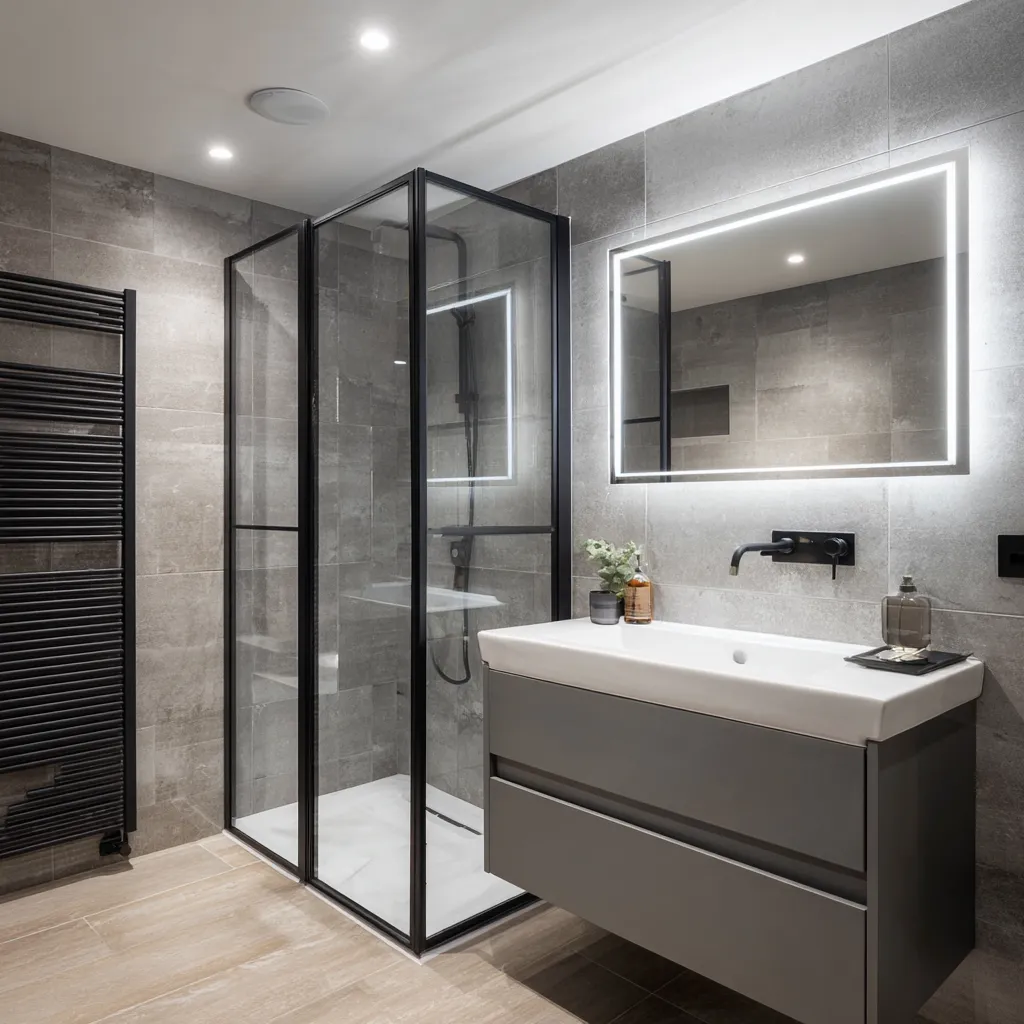
Porcelain and ceramic remain unbeatable in two situations. Over electric underfloor heating, tile conducts and holds warmth better than any vinyl product — if you're heating the floor, tile the floor (see our underfloor heating guide). And on solid concrete floors — ground-floor bathrooms, extensions — the no-flex substrate lets tile do what it does best: shrug off water, scratches and decades.
On a bouncy timber floor, though, tile is a slow-motion failure: grout lines crack hairline-fine, water finds them, and the first sign is a stain on the ceiling below. It's a repair we're called to more often than any other flooring fault.
Sheet Vinyl: The Underrated One
One piece, welded or sealed at the edges, zero joints in the field of the floor: for pure waterproofing per pound, sheet vinyl is hard to argue with, which is why it floors most rental refits and plenty of family bathrooms. Modern cushioned sheet is warmer than its reputation. The trade-offs: a damaged area means patching or replacing the sheet, seams and edges rely on the installer's discipline, and the budget ranges still look like budget ranges up close.
Side-by-Side Comparison
- Warmth underfoot: LVT and cushioned vinyl comfortably ahead; tile cold unless heated
- Waterproofing: sheet vinyl (seamless) edges LVT (sealed joints); tile depends entirely on grout condition
- On timber floors: LVT and vinyl happily; tile only with serious stiffening work
- Repairability: LVT (plank swap) ahead of tile (if you kept spares) ahead of sheet (patch or replace)
- Budget order: sheet vinyl, then LVT, then tiled — including the labour and prep each demands
Which Floor for Which Room
Upstairs family bathroom on timber: LVT. Ground-floor room on concrete wanting stone looks or UFH: tile. Rental or hard-budget refit: sheet vinyl, fitted by someone who takes edges seriously. Whichever you pick, the floor goes in after the subfloor prep and before you fall in love with a finish — bring the samples home and look at them in your own light, which is exactly what the free home visit is for.
Related reading: Is bathroom underfloor heating worth it?, Wet wall panels vs tiles, Anti-slip bathroom flooring compared, What's in our packages.
Not sure which way to go in your own bathroom? Call 01236 801802 — a five-minute conversation usually settles it.