The bathroom is the household's slip capital — hard surfaces, water, bare feet and, in the households that ask us about this most, bones that don't bounce. The flooring conversation is where safety is won cheaply, and it's been transformed in a decade: anti-slip no longer means the speckled blue vinyl of a leisure-centre changing room. Here's the honest ranking, and how to get protection that looks like a bathroom you chose.
The Actual Slip Problem
Falls happen at transitions: stepping out of the shower onto smooth wet floor, the climb over a bath edge, the pivot at the basin on a splashed surface. Three factors multiply — surface grip when wet, water reaching the floor at all, and what the faller was negotiating (that bath edge again). Flooring addresses the first; shower design the second and third — which is why this guide pairs with our accessible bathrooms work and the level-access options.
How Slip Resistance Is Measured
Two systems appear on spec sheets: the pendulum test (PTV — 36+ counts as low slip risk, the figure UK safety guidance leans on) and the German ramp test (R9–R13 — R10 is the honest bathroom minimum, R11 generous). Treat ratings as comparators, not guarantees: they're measured wet with standardised soles, and a soapy floor under bare feet is its own event. The useful takeaway — a floor with no wet rating at all is telling you something.
The Options, Ranked
- Safety vinyl (aggregate-embedded sheet): the clinical-proven performer — grit in the wear layer keeps grip when soaked, seamless install keeps water on top. The look has improved from speckled-blue to passable wood and stone. Right where slip risk is the dominant design driver.
- Textured LVT: quality embossed-surface LVT reaches honest R10-class grip while looking like the floors in our gallery — because it is. Warm, repairable, and the sweet spot for ageing-in-place refits that refuse the institutional signal. Our default recommendation.
- Textured/rated porcelain: R11 tiles exist and grip well — with tile's usual bathroom caveats (cold, hard landings if a fall happens anyway, grout on the timber-floor problem).
- Smooth gloss tile: the villain — beautiful dry, ice-rink wet. If it stays, so do mats.
- Mats and appliqué strips: the retrofit stopgap — genuinely helpful in-shower; loose mats elsewhere are trip hazards wearing safety costumes. Choose suction-backed, replace when tired.
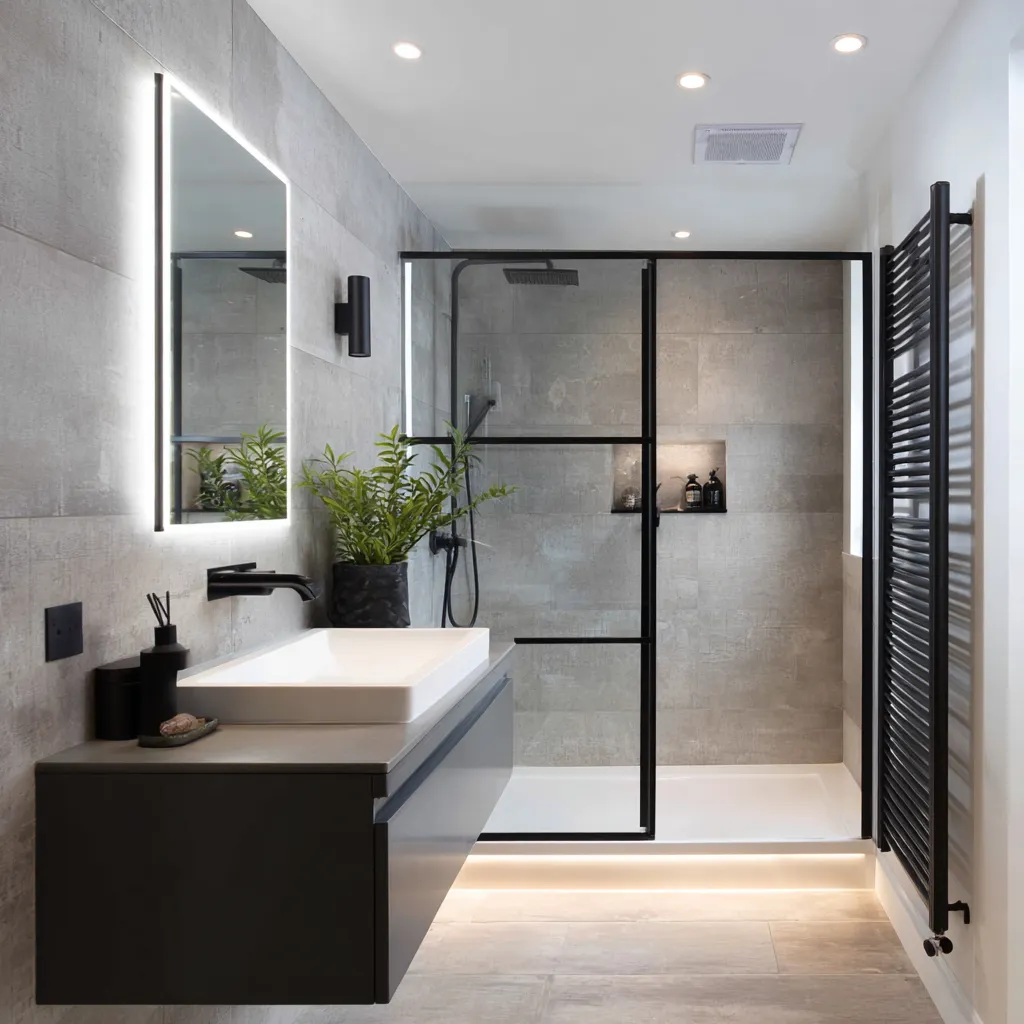
Beating the Institutional Look
The fear that stalls these conversations is aesthetic: nobody wants their home to announce frailty. The modern answer is that the safest sensible choices now pass as pure style — textured LVT in stone or timber, a level-access tray, a fixed screen, a thermostatic valve — every one of them readable as contemporary design, because they are. Discreet grab rails in brushed finishes mount on reinforced wet-wall build-up and read as towel rails. Safety that looks like taste is entirely buildable.
Flooring as Part of a Safer Room
The floor forgives; the design prevents. Level-access showering deletes the bath-edge climb (our most-requested conversion for exactly this reason); a shower seat and handset covered seated washing; lighting that's bright and shadow-free (zoned properly) helps eyes that need more of it; and warm surfaces reduce the hurry that causes slips. VAT relief can apply to qualifying adaptations for disabled residents — flagged honestly in our wet room guide.
What We Recommend, by Household
Future-proofing fifty-somethings: textured LVT + level-access tray now, reinforced walls for rails later — zero institutional signal, everything ready. Supporting an older resident today: textured LVT or safety vinyl, level access, seat, thermostatic — the full package from our accessible fits. Young household: quality textured LVT anyway; wet floors don't check birthdays.
Related reading: Accessible bathrooms, Accessible design guide, LVT vs vinyl vs tiles, Level-access options.
Not sure which way to go in your own bathroom? Call 01236 801802 — a five-minute conversation usually settles it.