Not every tired bathroom needs us — and a firm that tells you otherwise is selling, not advising. Re-enamelling, tile paint and hardware swaps are real options with real results in the right room. This is the honest map of where the refresh economy works, where it quietly wastes money, and how to tell which bathroom you own. It pairs with our replace vs refurbish guide, which handles the bigger fork.
What Refresh Actually Covers
- Bath resurfacing/re-enamelling: a chipped or stained tub recoated in situ — specialist job, done in a day
- Tile painting: sound, well-adhered tiles repainted with specialist coatings
- Hardware refresh: new taps, seat, shower head, towel rail, sealant re-run — the weekend-scale uplift
- Regrout and reseal: the deepest of the shallow fixes; transforms grubby tiling that's structurally fine
Where the Refresh Genuinely Wins
Three profiles where we'd honestly tell you not to buy a bathroom from us:
- The sound-but-shabby room: layout works, floor solid, walls dry — it just looks 2009. Hardware, sealant and paint can buy five happy years for under £500.
- The pre-sale tidy-up: selling within a year? Buyers refit to their own taste anyway — spend hundreds presenting clean and neutral, not thousands on their decision (our adds-value guide has the numbers).
- The rental turnaround: between tenants, cosmetic-condition room — refresh meets the standard without the void period a refit costs. (Where the Repairing Standard is the issue, that's not cosmetic — see below.)
Where It's Money Down the Old Drain
Surface fixes fail predictably when the problem was never the surface:
- Mould that returns through new paint — a ventilation and cold-surface problem (why it keeps coming back), not a colour problem
- A bouncy or stained floor — water's already below; resurfacing the room above a failing floor is upholstering a sinking boat
- Cracked grout lines re-grouted annually — that's floor movement telling you tiles were the wrong finish; the cycle doesn't end until the substrate's addressed
- Resurfacing a resurfaced bath — coatings on coatings have short, disappointing lives; second time round, replace the tub
- A layout that doesn't work — no coating fixes a bath you climb over to reach a WC you sit sideways on
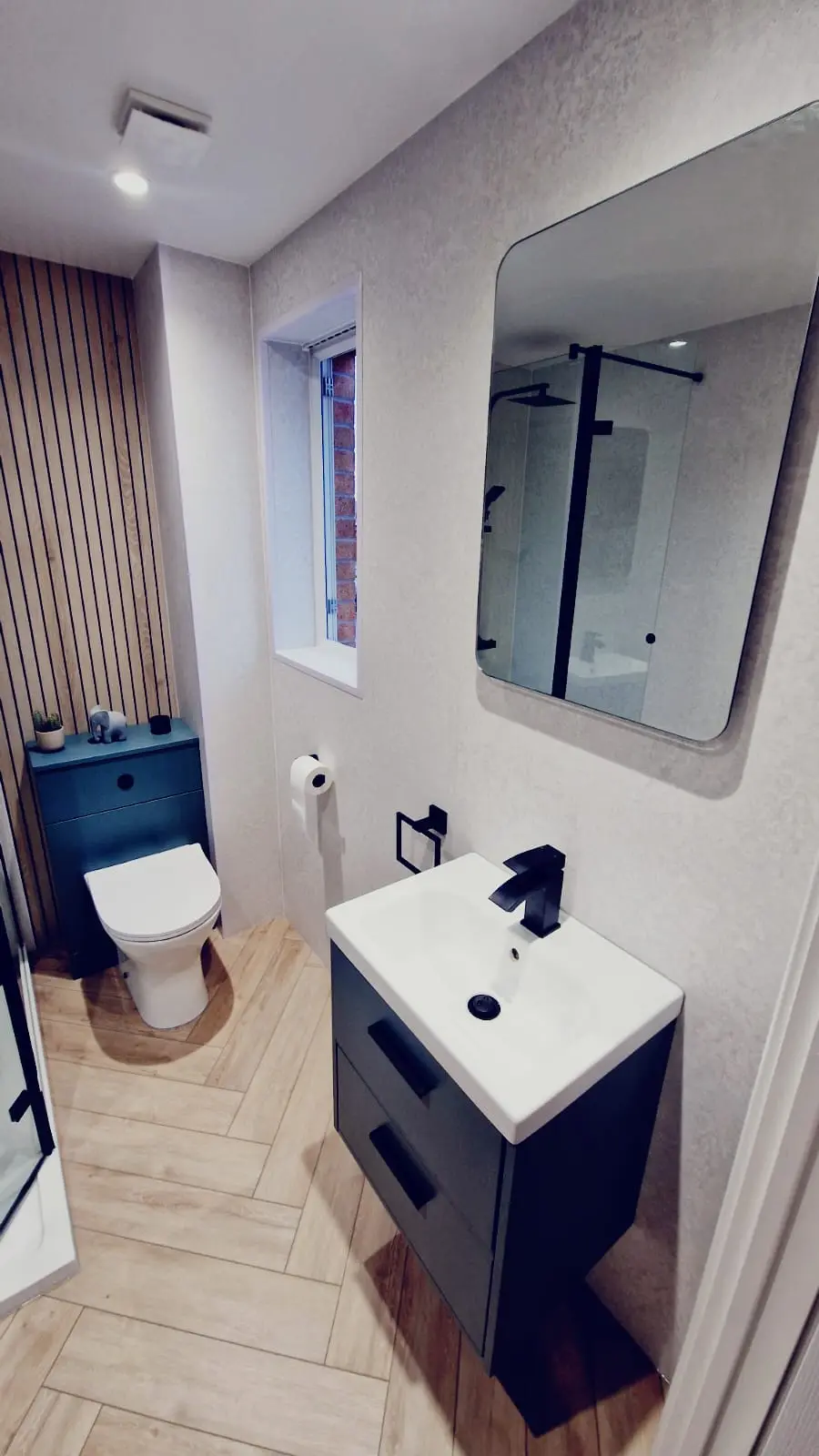
The Boundary Line Test
Press the floor around the WC and bath — any give means water's below and refresh is off the table. Check silicone lines — black spotting inside the bead means it's failed and water's behind. Count the mould's comebacks — twice through fresh paint means it's the room, not the walls. And ask whether you'd keep this layout for ten more years. Four passes: refresh with confidence. Any fail: the cheap fix is the expensive one.
The Middle Option Nobody Mentions
Between the £300 refresh and the full refit sits the honest half-step: keep the sound suite, replace the failing envelope — wet wall over the tired tiles, new LVT over the prepped floor, re-seal throughout. It fixes the structural surfaces (walls and floor are where bathrooms actually fail) without buying ceramics you don't need. Ask us to price it that way — a fixed quote costs nothing either way.
Deciding Honestly
Cosmetic problem, sound room: refresh — and we'll say so on the visit rather than sell you a refit. Structural symptoms, failed envelope, wrong layout: the refresh is a deposit on doing it twice. If you're unsure which you own, that's precisely what a free no-obligation visit settles.
Related reading: Replace vs refurbish: the bigger fork, Why bathroom mould comes back, Bathrooms and Scottish house value, What adds cost to a quote.
Not sure which way to go in your own bathroom? Call 01236 801802 — a five-minute conversation usually settles it.