The oversized rainfall head is the showroom's favourite prop — and fitted to the wrong house, the most common source of shower buyer's remorse we meet. The physics is unglamorous: a head can't deliver more water than the system feeds it, and doubling the diameter quarters the intensity per point of skin. Here's how to buy the drama without the disappointment.
What Rainfall Actually Means
A rainfall (or drencher) head is a wide, flat plate — typically 200 to 400 mm — mounted overhead from the ceiling or a wall arm, designed to fall vertically over the whole body rather than jet at it. The experience is genuinely different from a conventional head: enveloping, quiet, low-pressure by design. The catch is in that last phrase — it's a volume experience, and volume is exactly what most UK domestic systems ration.
Size: The Flow Equation
Spread a fixed flow over a growing plate and intensity drops fast. Rough guidance from fitting these across every system type:
- 200 mm: the safe universal — feels properly rainfall on any healthy system, including ordinary combis. What we fit as standard.
- 250 mm: the sweet spot on strong combis and unvented cylinders.
- 300 mm+: unvented or pumped systems only. On anything less it's a wide, lukewarm mist — the classic regret purchase.
Your system type sets the ceiling here — the combi vs cylinder guide explains which you have and what it feeds.
Why the Handset Matters More Than the Head
A fixed overhead head is wonderful until you need to rinse conditioner, wash a child, hose down the enclosure or avoid wetting your hair. A dual-outlet thermostatic valve — rainfall overhead, handset on a rail, diverter between them — solves all of it and is the single most-thanked recommendation we make. If the budget forces a choice, take the better valve and handset over the bigger plate, every time.
Round vs Square (and Mounting)
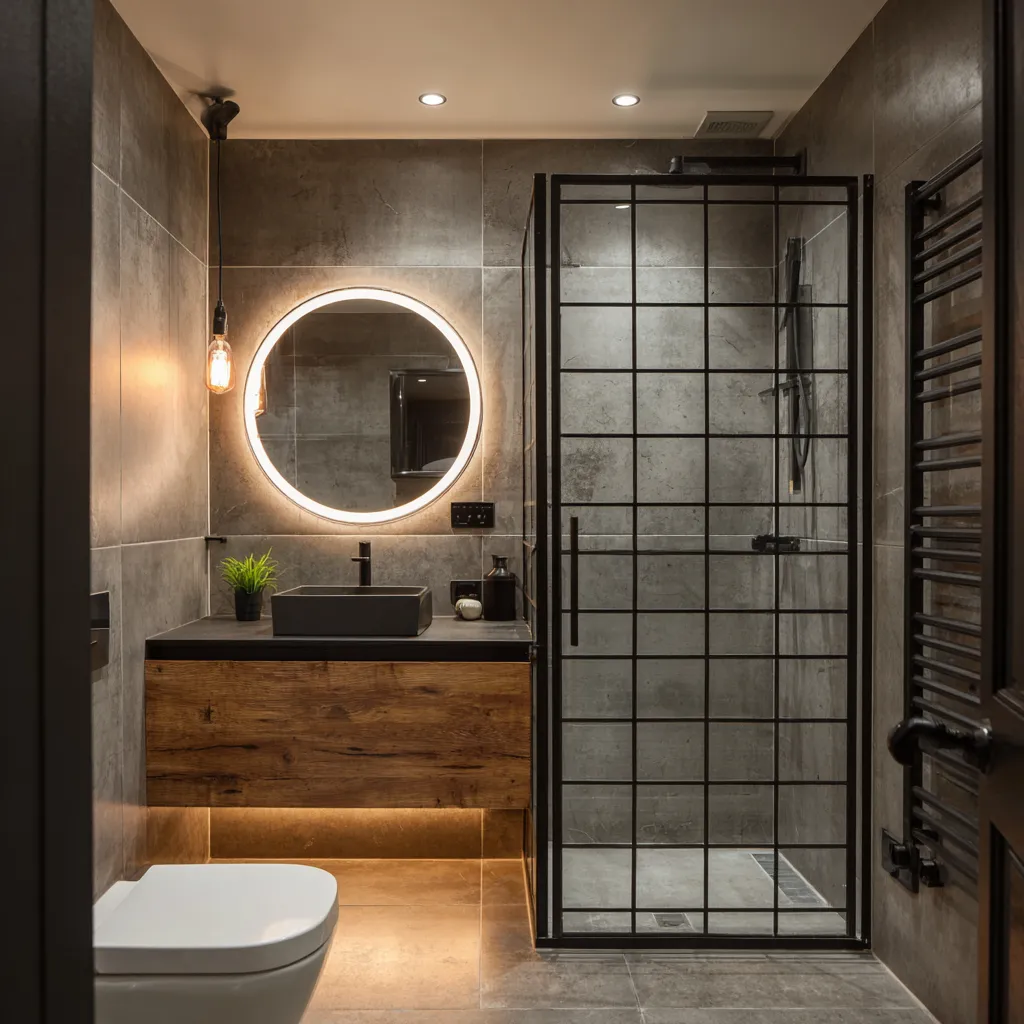
Hydraulically identical — pick whichever matches the room's language: square heads suit the straight lines of wet wall panels and framed screens; round softens minimalist and traditional schemes alike. Mounting matters more: ceiling-mounted looks cleanest but puts the pipe in the ceiling void (plan it during the refit, not after); wall-arm keeps the plumbing in the wet wall build-up where it's serviceable — our default for exactly that reason.
System Check Before You Buy
Two minutes with a bucket and a stopwatch tells the truth: measured flow at the outlet, not brochure optimism. We do this on every home visit before a shower is specified — it's why our recommendations occasionally disappoint in the showroom and never in the January morning.
Our Standard Recommendation
200–250 mm head sized to measured flow, wall-arm mounted, dual-outlet thermostatic valve with a rail handset — it's the rainfall setup included in our fitted packages, and the one configuration we've never been asked to change afterwards.
Related reading: Combi vs cylinder: what your shower depends on, Thermostatic vs manual valves, Electric vs mixer vs power showers, What's in the packages.
Not sure which way to go in your own bathroom? Call 01236 801802 — a five-minute conversation usually settles it.