Most bathroom projects run into the water rules exactly once — usually on the day someone arrives with a freestanding bath the size of a small car, or a shower-toilet ordered online because it looked clever. None of this is difficult. It's just easier to know beforehand than to find out with the floor already up.
Flush Volumes and Tap Flow
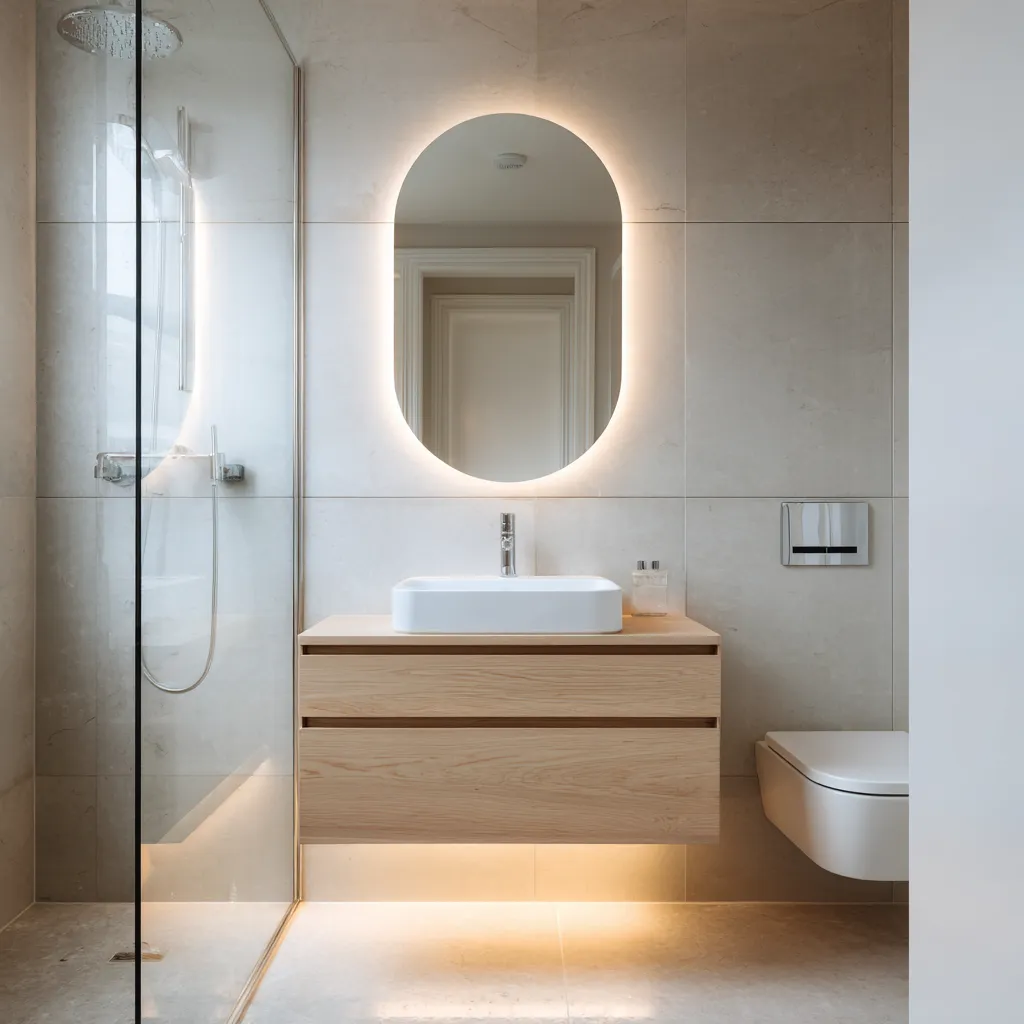
Current Scottish dwelling guidance sets a maximum of 4.5 litres for a single-flush WC and an average of no more than 4.5 litres for a dual-flush. Wash-basin and hand-rinse taps shouldn't exceed 6 litres a minute.
Scottish Government, Domestic Technical Handbook, April 2026, Standard 3.27. Applies where that standard applies — it is not a retrospective order to replace existing fittings.For context on what that saves: Scottish guidance cites an estimate of around 150 litres of water per person per day, with WC flushing accounting for roughly 30% of average domestic use. It's the single biggest slice. An older 9-litre cistern flushed a handful of times a day is quietly getting through a lot of water.
Two things worth being clear about, though. Scotland's household water charges are generally not metered by volume, so for most homes this shows up as an environmental gain rather than a smaller bill. And a low-flow tap on a system that was marginal to begin with can feel underwhelming — which brings us to the pressure section below.
The 230-Litre Bath Problem
This is the one that catches people. Scottish Water's byelaws govern plumbing connected to the public supply, and advance notification can be required for a bath with a capacity over 230 litres.
That sounds enormous until you look at what's actually being sold. A standard 1700 × 700 bath is nowhere near it. But a good number of the freestanding baths people fall in love with — the deep double-ended ones, the roll-tops with generous proportions — get close or go over. It's a specification you should check before ordering, not after delivery.
Scottish Water, Water Byelaws; the 2014 byelaws were extended to 12 May 2029. Approved-contractor arrangements can affect who does the notifying.There's a practical dimension too, and it's the one we raise first in a flat. A 230-litre bath full of water plus a person is a serious load on a floor that was designed around a 1970s steel bath. In Cumbernauld's New Town blocks especially, that's a conversation about joists before it's a conversation about notification.
Shower-Toilets and Cleansing Hoses
Bidet-style shower-toilets have become genuinely popular, and they're a real quality-of-life improvement for a lot of people — particularly anyone with limited mobility. Worth knowing that in Scotland, WC flexible cleansing hoses and shower-toilet arrangements can require advance notification, as can ascending-spray and flexible-hose bidets.
The reasoning is backflow protection: anything that could allow water to travel back toward the supply gets looked at more carefully. It's not a prohibition. It's paperwork and correct installation.
Got something unusual in mind? Tell us at the home visit rather than on fitting day. Almost everything is doable — it just wants sorting in the right order.
Book a free home visit Call 01236 801802Why Low-Flow Can Feel Wrong
Here's the honest trade-off nobody puts on the box. A 6 litre-a-minute tap on a well-pressured system feels perfectly normal. The same tap on a gravity-fed system with the tank in the loft and a long horizontal run can feel like a dribble.
Water-efficient fittings need to suit the hot-water system and the drainage they're going onto — that's the caveat in the guidance itself, not us being difficult. Low-flush WCs in particular want a decent fall on the waste run; put a 4.5-litre flush on a long, lazy horizontal run and you'll be introduced to a problem you didn't have before.
Which is why we ask about your hot-water setup early. Combi or cylinder changes what we can specify more than the tap catalogue does.
What This Means for Your Job
For the overwhelming majority of bathrooms we fit, the answer is: nothing you need to worry about. Standard suite, standard bath, standard taps — the products we specify comply as supplied and there's nothing to notify.
It becomes a live issue in three situations, and only three: you want a very large bath; you want a shower-toilet or a bidet with a spray or hose arrangement; or you're supplying your own fittings from somewhere that doesn't sell to the Scottish market.
That last one is worth dwelling on. Products bought from overseas sellers may not meet UK water-fittings requirements at all, and it's the householder who carries that, not the retailer who shipped it. It's one of the reasons we're supply-and-fit rather than labour-only.
Related reading: Scottish building regulations, combi vs cylinder, bathroom running costs, and freestanding vs built-in baths.
Planning something out of the ordinary? Call 01236 801802 and we'll tell you straight whether it's simple, or whether it needs a conversation with Scottish Water first.