Shower trays are the bit of the bathroom nobody talks about — and the bit that fails first if it's the wrong choice. Three main options dominate the UK market, and the difference matters. Get it right and the tray outlives the rest of the bathroom; get it wrong and you'll be calling someone back in three years to redo it.
Acrylic Trays
Vacuum-formed sheet acrylic backed with reinforcing board (usually MDF or chipboard). Lightweight, hollow-feeling, supplied flat-pack with a leg-set kit you adjust to level.
Strengths:
- Cheapest by a clear margin — typical 900 × 900 acrylic tray costs £80–£150 supply
- Lightest to handle — one fitter can carry and install
- Warm to bare feet (acrylic doesn't pull heat out the way stone resin does)
Weaknesses:
- Flexes underfoot — the surface deflects 2–3mm under an adult's weight, and that flex transfers to the silicone seal at the wall, eventually pulling it loose
- Stains permanently from hair dye, fake tan and certain cosmetic products
- The MDF backing is the failure point — if water gets through a damaged silicone joint, it soaks the backing and the whole tray needs replacing
- Doesn't always pass the squeak test 5 years in
Where we still fit them: rental properties, second bathrooms with low usage, and budget refits where the customer needs the cost saving more than they need the tray to last 25 years.
Stone Resin Trays
Cast from a mineral-filled resin (typically calcium carbonate or aluminium hydroxide bonded with polyester resin). Solid through the full thickness — no hollow backing, no flex, no transfer of movement to the seal.
Strengths:
- Rock-solid underfoot — zero flex even on suspended timber floors
- Stain-resistant — modern stone resin trays have a gel-coat finish that doesn't pick up colour from hair dye or tan
- Visually heavier and more premium — the surface looks and feels like a single solid material
- Long lifespan — properly fitted, a stone resin tray will outlast the rest of the bathroom by a clear margin
- Available as low-profile (25–35mm) or ultra-flat (12–25mm) for level-access feel without fully recessing
Weaknesses:
- Heavy — a 1200 × 900 tray weighs 35–50kg; usually a two-fitter lift
- Cold to bare feet (denser material draws heat out faster than acrylic)
- More expensive — typical 1200 × 900 stone resin tray is £250–£550 supply
- Repair is essentially impossible if cracked — replacement is the only fix
Where we fit them: our default for any tray over £200 that isn't going tile-in. Standard inclusion on Premium and Luxury bathroom packages.
Tile-In / Level Access
The shower zone is fully recessed into the floor, with the floor finish (tile or LVT) running continuously through the shower area. A linear or point drain is set into the floor; the shower has no "tray" as such — just a graded section of the bathroom floor.
Strengths:
- The most premium look — wet-room finish, no visible tray edge, no step to enter
- Wheelchair-accessible by definition — single most-fitted base for our accessible bathroom installations
- Hardest-wearing — there's no joint between tray and floor, just the wall silicone, so the failure points are minimised
- Visually expands the room — the floor reads as one continuous surface rather than a bathroom with a shower in it
Weaknesses:
- Most expensive — supply and install of a tile-in base is typically £600–£1,200 over the cost of a stone resin tray
- Requires a deep floor build-up (40–60mm) — not always feasible in a CDC-era flat where the floor's already at the door threshold
- Tanking is critical — done wrong, water tracks under the tile and into the substrate. We tank to BS 8000-11 spec on every level-access fit
- Repair if drainage fails involves lifting tile
Where we fit them: wet rooms, accessible bathrooms, premium fits in larger rooms where the floor build-up is workable. Sometimes the right answer in a small CDC-era flat too — losing the tray edge and step actually makes a small bathroom feel bigger.
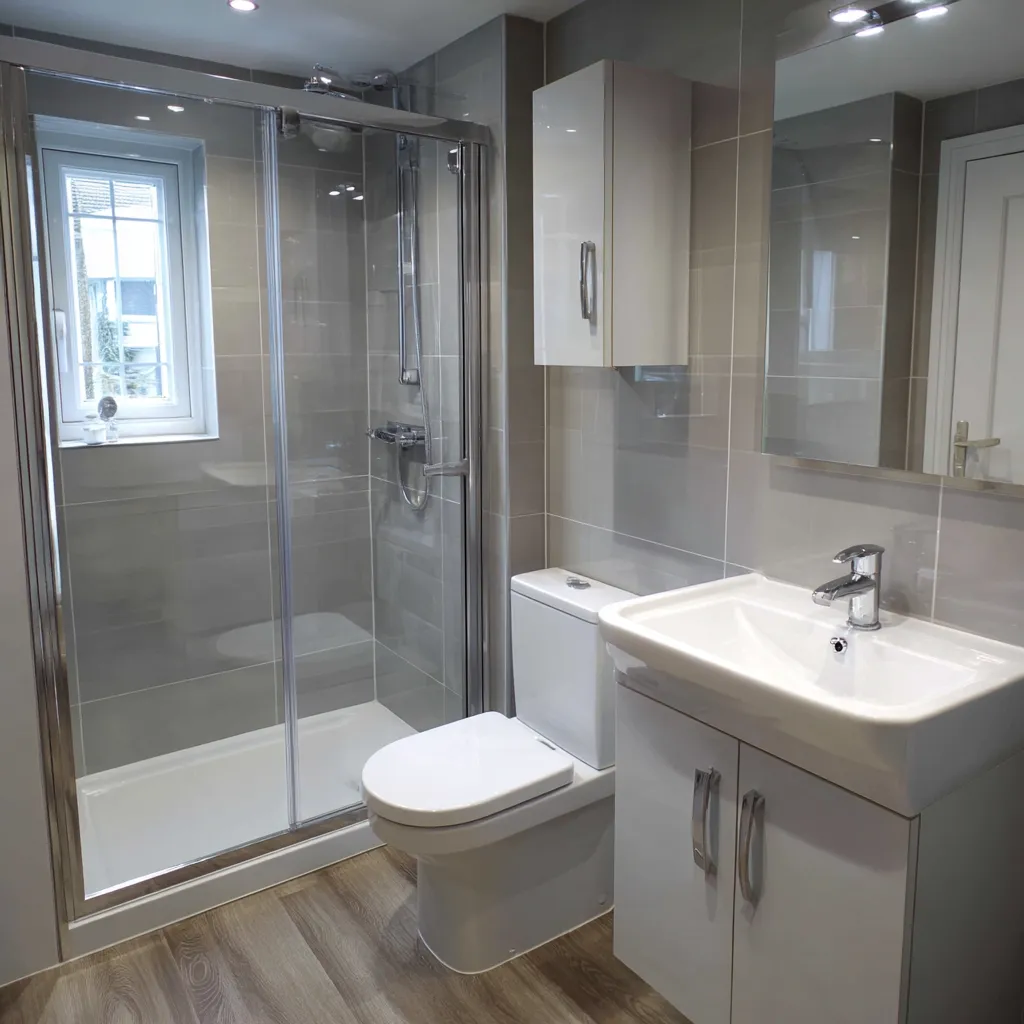
Real Cost Difference
Like-for-like 1200 × 900 shower zone, supply and install:
- Acrylic: £200–£350 fitted (tray + waste + sealant labour)
- Stone resin: £450–£700 fitted
- Tile-in / level access: £900–£1,500 fitted (tray, tanking, drain, additional substrate work)
Across a 25-year horizon the cost-per-year differences narrow significantly — an acrylic tray that needs replacing at year 8 is on its third unit before a stone resin tray needs touching, so the lifetime cost of acrylic and stone resin are closer than the upfront price suggests.
Which to Pick
Standard refit on a budget
Stone resin, low-profile. The right balance of cost, longevity and feel for the vast majority of bathroom fits we do. Our default unless the customer asks otherwise.
Tight budget, second bathroom, rental
Acrylic. Save the £200–£300 difference; redo it in 8–10 years if needed. Not the wrong choice — just the right choice for the specific use case.
Wet room or accessible fit
Tile-in / level access. The whole point of a wet room is the seamless floor — a tray of any kind defeats the purpose. Required for proper accessibility specs.
Luxury fit
Tile-in if the floor build-up allows; ultra-flat stone resin if not. Both read as premium; the tile-in reads more so. Standard on our Luxury Bathrooms spec.
Bath-to-shower conversion
Stone resin, low-profile as default. Tile-in is sometimes possible but requires lifting more of the floor than most conversions justify. More on conversions here.
Related reading: wet room vs walk-in shower, waterproofing 101, our walk-in shower service.
Not sure which suits your floor build-up? Mention it at the home visit — we'll measure and tell you what's feasible. Call 01236 801802 to book.