Balloch, Smithstone, Craigmarloch, Westfield — the estates that grew Cumbernauld through the 90s, 2000s and since are full of the same bathroom: white suite, half-height beige tiles, a chrome mixer, a bath nobody chose. It's not badly built; it's minimally built. Which makes it one of the most satisfying upgrade jobs there is — here's the map.
What the Developer Actually Fitted
Volume housebuilding is procurement at scale: the bathroom spec is the cheapest package that shows well on completion day. Typically: entry-tier ceramics (fine, plain), acrylic bath of the thinner persuasion, tiling only where regulations and appearances demand, builder-range taps and shower, a basic extractor, and vinyl or the thinnest laminate underfoot. Upgrade options at purchase were offered — at margins that made aftermarket refits look cheap. None of it is defective. All of it is the minimum.
The Good News: The Bones
Everything expensive about older-stock refits is already solved: modern plastic plumbing in accessible runs, a soil stack in a stud wall (the flexible best-case from our stack layout guide), RCD-protected consumer unit, insulated fabric, and a layout drawn this century. Where a 1960s flat refit spends real money reaching modern baseline, a new-build starts there — the entire budget goes on visible quality.
What's Worth Upgrading
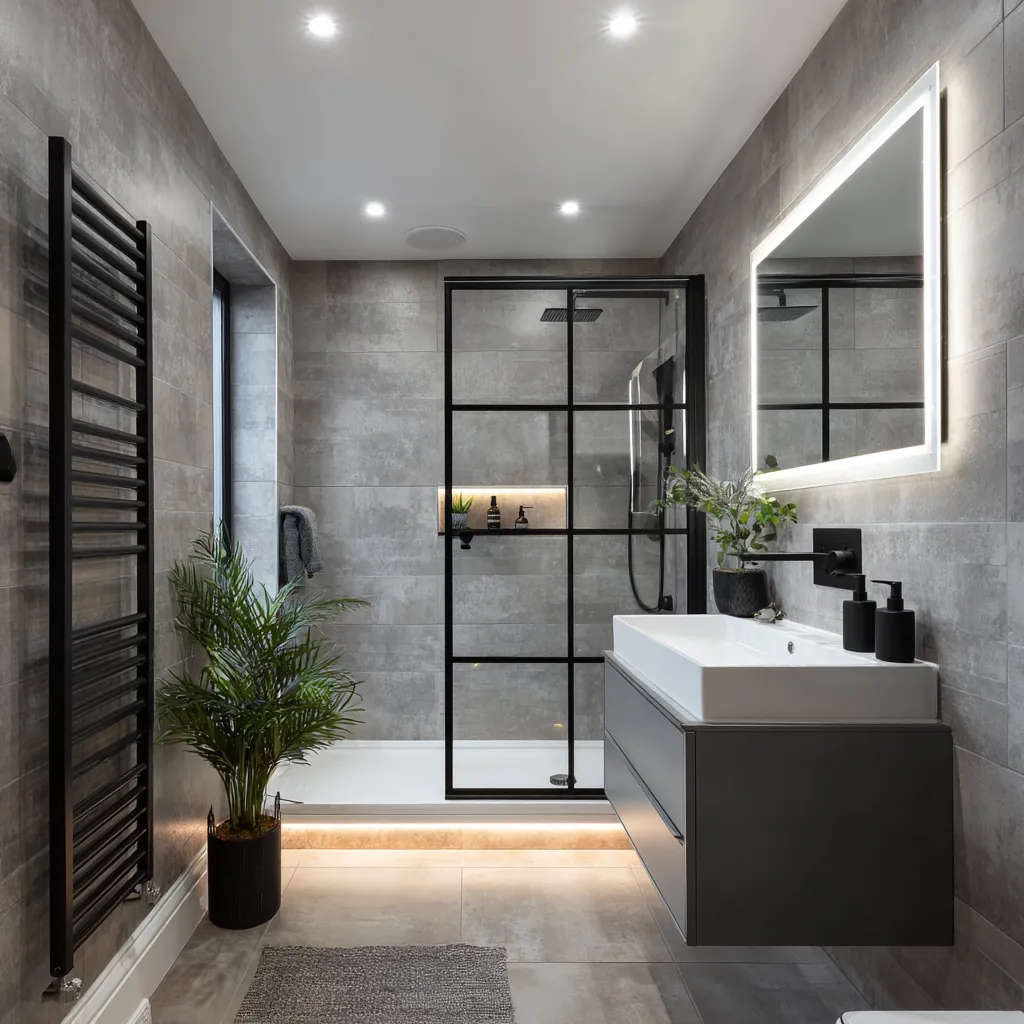
- The envelope: half-height beige tiles → full-height wet wall; thin floor → proper LVT. The transformation is mostly here.
- The shower: builder-basic mixer → thermostatic dual-outlet with a decent head (the rainfall guide applies — new-build combis usually feed 200–250 mm well)
- Storage and furniture: pedestal basin → vanity unit; the developer never met your family's bottle collection
- The moving parts: seats, wastes, valves — the procurement-grade internals are where builder spec cuts deepest (see branded vs trade)
- Skip usually: relocating sanitaryware — the layout's generally rational; spend on spec, not on moving pipes
Warranties and the Snagging Window
New homes carry a structural warranty (NHBC Buildmark or similar) — ten years on structure, two on fixtures and workmanship via the developer. Two practical rules: let the two-year window run before refitting — snag the original bathroom on the developer's account, not yours; and afterwards, keep refit paperwork tidy, since structural cover continues and clean documentation of competent alteration avoids any argument. Refitting a bathroom doesn't void a structural warranty — but certified electrics and documented workmanship (ours comes in writing) keep every future conversation short.
The Local Estates We See
Late-90s Balloch and Condorrat additions: first bathrooms now well past tired — full refit territory with excellent bones. 2000s Smithstone and Westfield: the beige-tile era at its beigest — envelope-and-spec upgrades land hardest here. Newer Craigmarloch phases: often just the shower-and-storage pass while the two-year window runs. Street by street, the pattern holds: Balloch, Smithstone, Westfield, Craigmarloch.
How We Approach New-Builds
Keep the layout, gut the spec: full-height panels, LVT, thermostatic shower, vanity storage, quality internals — typically landing in the standard package band because the bones need nothing. It's the least-disruption refit we do: 5 days more often than 7, no structural surprises, and the beige goes in the first skip load.
Related reading: Soil stack layouts by block type, Branded vs trade suites, 2026 design trends, Fitted bathrooms Balloch.
Not sure which way to go in your own bathroom? Call 01236 801802 — a five-minute conversation usually settles it.