Walk into bathrooms across Cumbernauld — CDC flats, Radburn terraces, ex-council semis — and the same white box appears above the bath, decade after decade, brand after brand. The electric shower's grip on Scottish bathrooms isn't habit or thrift: it's a rational answer to how these houses were plumbed. Understanding the reason tells you whether it still applies to yours.
How the White Box Conquered Scotland
Mid-century British plumbing — and Scottish council building embraced it wholesale — was gravity architecture: a cold storage tank in the loft feeding a hot cylinder below, with pressure set purely by the height difference. It made robust, quiet, low-pressure hot water for taps and baths. Showers, arriving as an aspiration in the 70s and 80s, exposed its weakness overnight: a head fed by a metre of drop delivers a sad trickle, and in top-floor flats and bungalows there was often no drop at all. The electric shower — mains-pressure cold, heated on demand in the unit — simply ignored the entire system. Plumb one cold pipe, run one cable, and every house in Scotland could have a working shower. So every house did.
The Gravity Problem, Explained
Gravity pressure is roughly 0.1 bar per metre of height between tank base and shower head. A loft tank two metres above a first-floor head gives 0.2 bar — barely enough to push water through a modern head. The fixes are the ones in our combi vs cylinder guide: a pump (turning gravity storage into a power shower), a combi conversion (mains pressure everywhere), or the electric box that sidesteps the question. Scotland's stock chose the sidestep for forty years.
The Independence Argument
Electric's underrated virtue: it's the only shower that works when the boiler doesn't. Its own heat source, its own supply, no cylinder to empty — which is why even homes with excellent mixer showers often keep an electric unit in the en-suite as the backup. In a one-shower household, that resilience deserves real weight: boiler breakdowns cluster in January, and so do cold mornings.
The Winter Flow Trade-Off
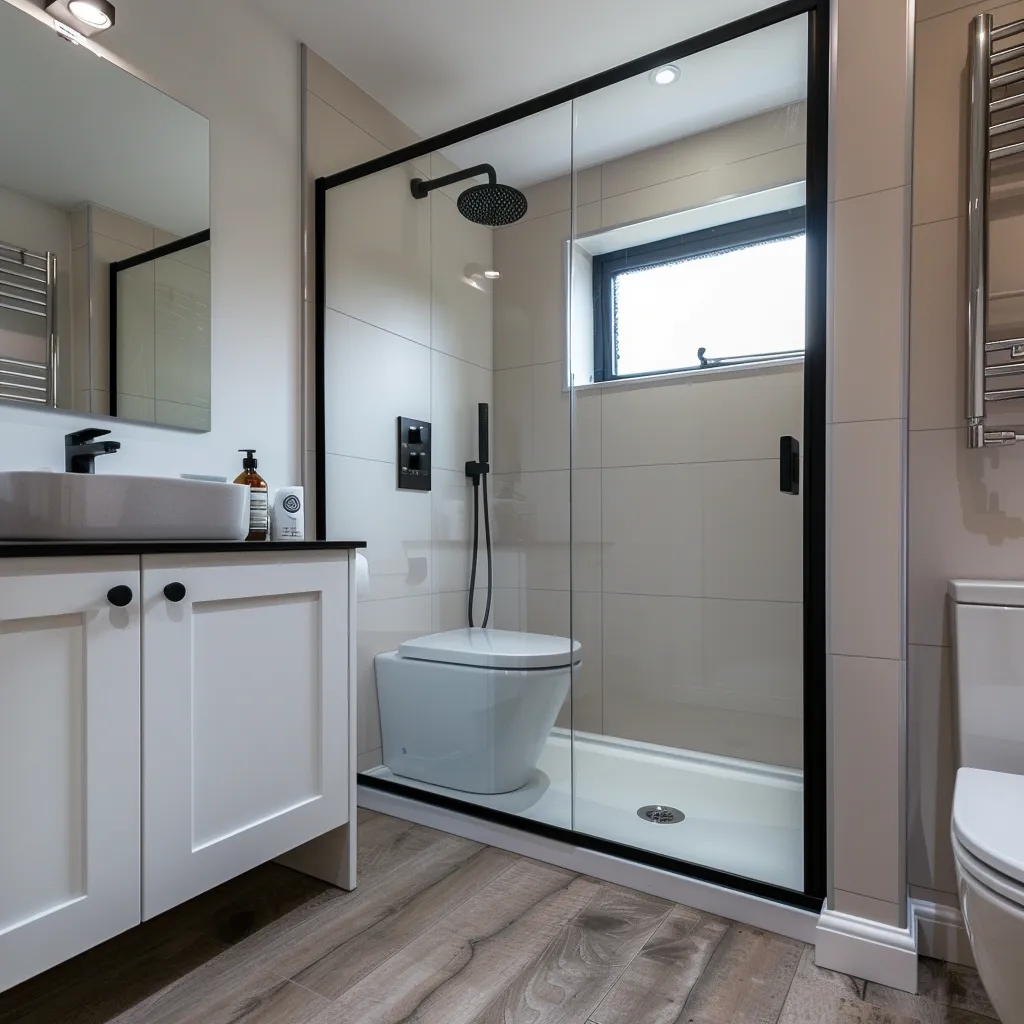
Electric's honest weakness, sharpest in Scotland: the unit can only pass the water it can heat, and January mains here arrives near freezing. The same 9.5 kW box that showers generously in July slows to warm-adequate in deep winter — precisely when you want the opposite. Higher kilowatt ratings blunt this (fit the biggest the circuit supports — the brand guide explains), but physics keeps the trade: mixers fed by stored or boiler-heated water don't slow down in winter. Electrics do.
The Refit Decision
A refit reopens the choice cheaply — walls open, circuits accessible. The modern reality check: if your home has been combi-converted (most Cumbernauld stock now has), the original reason for the electric box is gone — a thermostatic mixer will outshower it year-round. If you're still on a gravity cylinder, electric remains the zero-drama answer, or a pump unlocks the mixer route. And plenty of households rationally run both: mixer as the daily, electric as the insurance.
Keep It or Change It?
Keep electric if: gravity system unchanged, one-shower resilience matters, or the en-suite backup role suits. Switch to a mixer if: a combi or unvented system now sits behind the wall and winter flow annoys you. Either way, decide during the refit while the choice costs least — we test the pressure, do the maths and price both on the home visit.
Related reading: Electric vs mixer vs power, Combi vs cylinder guide, Electric shower brands, Replacing a 1970s bathroom.
Not sure which way to go in your own bathroom? Call 01236 801802 — a five-minute conversation usually settles it.