Cumbernauld Village's old core, the stone terraces of Kilsyth and Kirkintilloch, farmhouse conversions on the district's edges — plenty of local bathrooms live inside protected heritage. The word "listed" stops refit conversations dead with visions of committees vetoing taps. The reality is more navigable and more interesting. Here's how the two Scottish regimes actually work, and how we fit inside them.
Two Regimes, One Confusion
Conservation area status protects the character of a place — streetscapes, frontages, trees, rooflines. Listing protects a building as historic fabric, graded A, B or C in Scotland, inside and out. A house can be in a conservation area, listed, both, or neither — and which applies changes everything about a bathroom project. First job on any heritage enquiry: establish exactly which regime you're in (your council's planning portal and Historic Environment Scotland's listing search settle it in minutes).
Conservation Areas: The External Rule
Conservation area control bites on external and visible works — windows, doors, extensions, satellite dishes. An internal bathroom refit doesn't touch it. Where it brushes our work: external penetrations — a new extractor terminal or waste route through a front-facing wall may need care or consent where permitted development rights are restricted; discreet siting on rear elevations usually resolves it. And replacement bathroom windows in a conservation area must typically match what they replace. Beyond that: fit the bathroom you want.
Listed Buildings: The Character Rule
Listed building consent (LBC) is required for works affecting the character of a listed building — and unlike planning permission, there's no de minimis for interiors. The pivotal question is what counts as character: original fabric (panelling, cornicing, historic joinery, early fittings) does; a 1985 avocado suite in a converted box room does not. In practice, replacing a modern bathroom in a previously-altered room, like-for-like in footprint, is frequently not consent-triggering — but that judgement belongs to the council's conservation officer, not to us or you. Unauthorised works to a listed building are a criminal matter in Scotland; a phone call to the planning department first is free and settles it in writing.
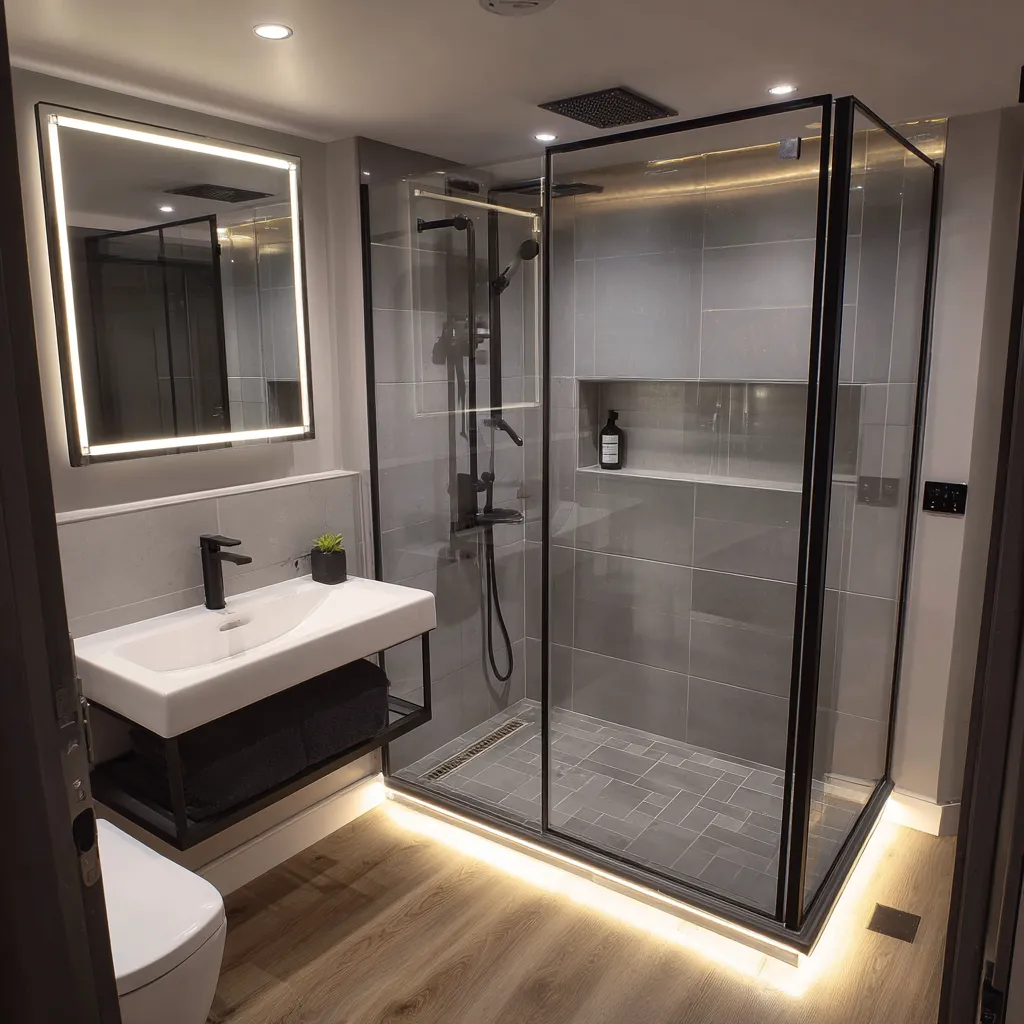
When Consent Is and Isn't Needed
- Usually no LBC: like-for-like replacement of a modern bathroom in an altered room; redecorating; new sanitaryware in existing positions
- Ask first: new penetrations through walls (waste, ventilation), moving the bathroom to a new room, works touching any original surface or joinery
- Almost always LBC: removing historic fabric, altering plan form, anything to a Category A interior
- Separately, as anywhere: building warrant rules still apply on their own track — our building regs guide covers those
Designing Modern Comfort into Old Fabric
The heritage-friendly toolkit happens to be ours anyway: battened wet wall build-ups that carry services and insulation in front of historic walls without chasing them — fully reversible, which is the conservation officer's favourite word; LVT floated or bonded over protected original floors; surface-routed services in concealment zones rather than cuts through old timber; and cold-wall insulation solving the solid-stone condensation that plagues these rooms (the tenement guide shares the logic). Old buildings reward the approach that touches them least.
The Local Picture
Around our patch: Cumbernauld Village's historic core, older stock through Kilsyth and Kirkintilloch, and rural conversions across the district edges. North Lanarkshire Council's planning team handles the consent questions; we handle the reversible, certified, warm result — and we'd rather make the checking phone call than assume, every time.
Related reading: Scottish building regs for bathrooms, Tenement bathroom guide, Fitted bathrooms Cumbernauld Village, Cold bathroom fixes.
Not sure which way to go in your own bathroom? Call 01236 801802 — a five-minute conversation usually settles it.