Shower screens come in three main forms — fully framed, semi-framed, and frameless. The difference is mostly visual but it has real consequences for cost, durability and how often you'll be cleaning the screen. This guide is the comparison we go through at the home visit when a customer asks which they should pick.
Fully Framed Screens
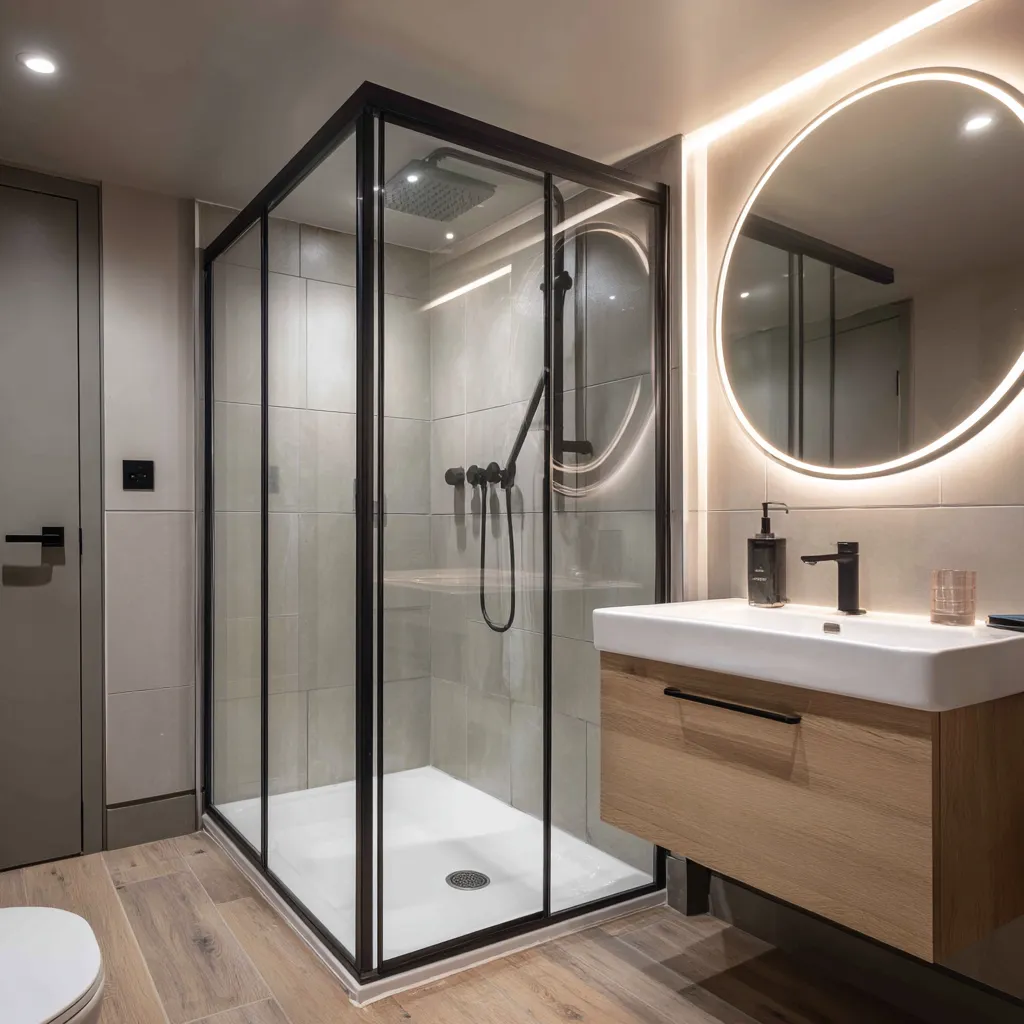
Glass set inside a continuous chrome or aluminium frame on all four sides. The frame is structural — it carries the weight of the glass and the door movement. Doors are hinged or sliding within the frame.
Best for: budget fits where the frame's visual presence isn't a problem. Family bathrooms with kids, where the frame protects the glass edges. Replacement of an existing framed screen on a like-for-like basis.
Pros:
- Cheapest of the three options
- Frame protects glass edges from chips and impact damage
- Easier to install on out-of-square walls — frame absorbs minor wall variations
- Sliding door variants take up less space than hinged doors
Cons:
- Frame collects soap scum and limescale at the seal points — requires regular cleaning
- Frame finish dates fast — chrome looks 2010s, white/silver aluminium looks 1990s
- Visually dominant — the frame reads as part of the bathroom design whether you wanted it to or not
Semi-Framed Screens
Frame on the wall fixings (vertical edge attached to the wall) and the bottom rail, but no frame on the leading edge or the top edge. The glass effectively floats at the door side. The most common spec we fit on standard bathroom packages.
Best for: the majority of bathroom fits. Standard inclusion on our Starter and Premium tiers. Good balance of look, cost and durability.
Pros:
- Cleaner visual than fully framed — leading edge is pure glass
- Wall-fixing frame still absorbs minor wall variations during install
- Cheaper than frameless by 30–50%
- Hinges and seals are less load-bearing than on frameless, so wear and tear is lower
Cons:
- Visible frame still dates — though slower than a fully framed screen
- Bottom rail collects water and grime in the same way fully framed does
Frameless Screens
Toughened glass (typically 8–10mm thick) with chrome clips at the wall fixings. No top frame, no bottom rail, no leading-edge frame. Pure glass with metal hinges and clips only.
Best for: feature bathrooms, premium en-suites, luxury fits. Standard on our Luxury Bathrooms tier and the Walk-In Plus tier of our bath-to-shower conversions.
Pros:
- Cleanest visual of any screen type — the glass disappears, the room reads bigger
- Easier to clean than framed (no frame to trap grime)
- Doesn't date — pure glass remains pure glass
- Strong impression on viewings if you're selling within 5 years
Cons:
- Most expensive option by a clear margin
- Requires precise installation — the wall fixings must be exact, the floor must be level, the glass thickness must be correct for the door size
- Glass edges are exposed and chip if hit — careful handling matters
- Wall must be properly substrate-built; flexible plasterboard alone isn't sufficient for the fixings
- Out-of-square walls can be problematic — frameless screens don't tolerate variations as well as framed
Real Cost Difference
Like-for-like 1200 × 900 walk-in screen, supply and install:
- Fully framed: £200–£350 fitted
- Semi-framed: £350–£550 fitted
- Frameless: £550–£950 fitted
Profiles in matt black or brushed brass add £80–£200 to any of the three options. Designer ranges (Crosswater, Hansgrohe, Aqualux Sphere) add 30–60% to the price; specifier ranges (Matki, Roman Liberty) double the upper range.
Cleaning & Maintenance
The biggest practical difference between the three is cleaning. Honest read:
Framed
Glass cleans normally; the frame is the problem. Chrome frames pick up soap scum and limescale around the seal points — requires a wipe-down every 2–3 weeks with a limescale remover. Aluminium frames pit and discolour over 5–10 years if not maintained. Most call-backs we get on shower screens 5+ years after install are framed screens with corroded frame work.
Semi-framed
Bottom rail and wall fixings still need cleaning, but only one third of the surface area of a fully framed screen. Manageable.
Frameless
Just the glass and the chrome clips. A squeegee after each shower keeps the glass spot-free; the clips need a wipe every few months. Genuinely the easiest of the three to keep clean.
Which to Pick
Standard family bathroom
Semi-framed. The right balance for the vast majority of fits. Standard inclusion on our Premium tier; you don't need to upgrade.
Tight budget, second bathroom, rental
Framed. Cheap, durable, easy to replace later. Don't spend money on aesthetic if the room doesn't earn it.
En-suite or premium main bathroom
Frameless. The visual difference is significant in a small en-suite where the glass dominates the room. Worth the £300–£500 premium.
Luxury fit
Frameless with brushed brass or matt black clips, 10mm glass minimum. Standard on our Luxury Bathrooms tier.
Wet room
Frameless single panel rather than a screen with a door. Open access, single-panel glass to one side, the whole room reads as one space.
Related reading: wet wall vs tile, our luxury bathroom service, walk-in shower service.
Want to see the three options side-by-side? We bring sample kits to the home visit — call 01236 801802 to book.