The toilet is the bit of bathroom design nobody wants to talk about, but it's where 80% of the visible plumbing in the room ends up. The choice between the three modern toilet types — wall-hung, back-to-wall, and close-coupled — affects how the bathroom looks, how much you pay, and how easy it is to clean. Here's the honest difference between them.
Close-Coupled — The Default
The classic UK toilet. Pan on the floor, cistern bolted directly to the back of the pan, button or lever flush on top of the cistern. Visible plumbing pipes go from the cistern down behind the pan to the soil stack.
Best for: any bathroom where budget matters, where the wall behind is solid masonry that can't easily be opened up, and where the customer wants something familiar that any plumber can fix in 10 years' time.
Pros:
- Cheapest of the three options by a clear margin
- Quickest to fit — typically 2 hours including waste connection
- Easiest to repair — every plumber knows how to fix one, parts are universally available
- Works on any wall type — solid or stud
Cons:
- Visible cistern, visible pipes, visible bolts at the base — clutters the room visually
- Cleaning is fiddly — the gap between cistern and wall, the bolts at the base, the trap behind the pan all collect dust
- Looks budget compared with the other two options
Typical supply price: £150–£400 fitted as part of a bathroom package.
Back-to-Wall — The Middle Ground
The cistern is concealed inside a built-out wall section behind the toilet. The WC pan sits on the floor as normal, but the back of the pan butts cleanly against a flat wall — no visible cistern, no visible pipes. A flush plate (chrome, white, brass, matt black) sits flush with the wall.
Best for: the sweet spot of cost-versus-look. Most of our Premium-tier bathrooms use back-to-wall WCs. The room reads clean and modern without the price step-up of going wall-hung.
Pros:
- Visually almost identical to wall-hung — no visible cistern, no visible pipes
- Cheaper than wall-hung by a meaningful margin
- Pan still floor-mounted, so weight loading isn't a concern
- Cistern is accessible from the wall behind via the flush plate — easy to service
- Works on any wall type — we just build out a 200mm-deep stud frame to house the cistern
Cons:
- The wall thickness increases by 200mm — fine in most rooms, but eats into a small CDC-era flat bathroom
- Slightly harder to clean around the base than wall-hung (the pan is still on the floor)
- Cistern repair requires the flush plate to come off — most owners would call a plumber rather than DIY
Typical supply price: £400–£800 fitted as part of a bathroom package.
Wall-Hung — The Premium Option
The cistern is concealed in the wall, the pan is mounted to a steel frame inside the wall, and the whole assembly appears to "float" off the floor by 25–35cm. No part of the toilet touches the floor. The flush plate sits flush with the wall.
Best for: any bathroom where the visual cleanliness matters more than budget. Standard fit on our Luxury Bathrooms tier. Particularly effective in compact bathrooms where the floor-flow underneath the pan visually doubles the perceived width.
Pros:
- The cleanest, most premium look of the three options
- Floor flows uninterrupted underneath — easiest to clean, no dirt traps
- Pan height is adjustable at install — set 5cm higher than standard for taller adults, or lower for accessibility
- Wall thickness build-out is the same as back-to-wall (200mm)
- Adds noticeable resale value in premium properties
Cons:
- The most expensive of the three options
- Requires a proper steel support frame (Geberit Duofix or equivalent) inside the wall — extra cost and install time
- Maximum weight load is typically 400 kg — fine for any normal use, but the frame and fixings have to be installed correctly
- Cistern repair is from the wall via the flush plate — same as back-to-wall
Typical supply price: £600–£1,400 fitted as part of a bathroom package, including the support frame and concealed cistern.
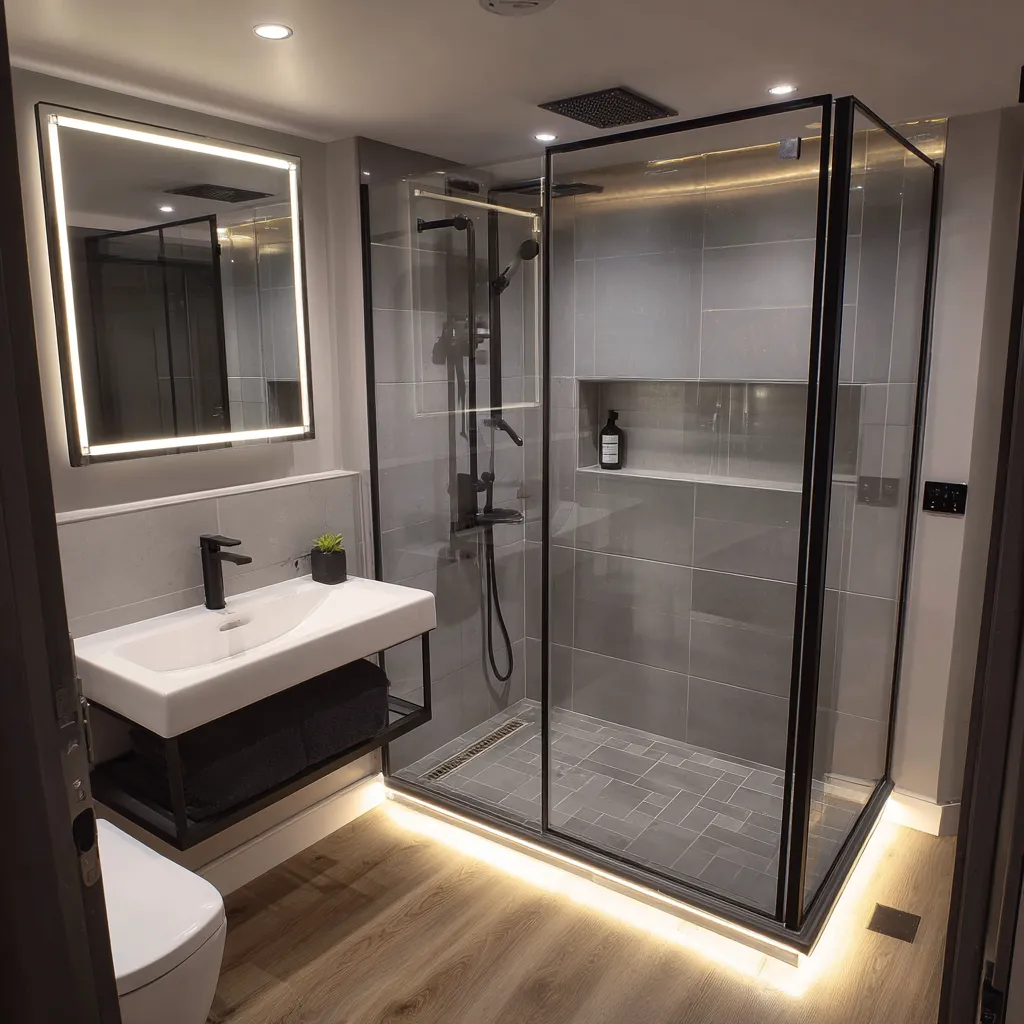
Real Cost Comparison
Fitted in a typical Cumbernauld bathroom package, like-for-like quality of pan and seat:
- Close-coupled: baseline (~£200 supply & fit)
- Back-to-wall: +£250–£400 over close-coupled
- Wall-hung: +£500–£900 over close-coupled
The wall-hung premium covers the support frame, concealed cistern, and the additional install time for the framing and the wall build-out. About 70% of our customers picking between back-to-wall and wall-hung end up choosing back-to-wall on cost grounds; the 30% who go wall-hung never regret it.
Which Suits Your Bathroom
Small CDC-era flat bathroom (1.9 × 1.7 m)
Wall-hung if budget allows — the floor-flow underneath visually expands the room. Back-to-wall if not. Avoid close-coupled here; the visible cistern dominates the small room.
Modern detached or semi-detached
Either back-to-wall or wall-hung. Wall-hung if the bathroom's a feature room (en-suite, principal); back-to-wall in family bathrooms where ease-of-use matters more than visual.
Period property (Edwardian or Victorian)
Depends on the design direction. Traditional close-coupled with a high-level cistern reads period-appropriate; back-to-wall works in a softly modernised period bathroom; wall-hung jars unless you've gone fully contemporary inside the period shell.
Tight budget
Close-coupled all the way. The bathroom can still look great around it; don't spend money you don't need to spend.
Related reading: our luxury bathroom service, traditional bathrooms guide, full cost guide.
Want to see all three in person before deciding? Bring it up at the home visit — we carry samples to your kitchen table. Call 01236 801802 to book.